

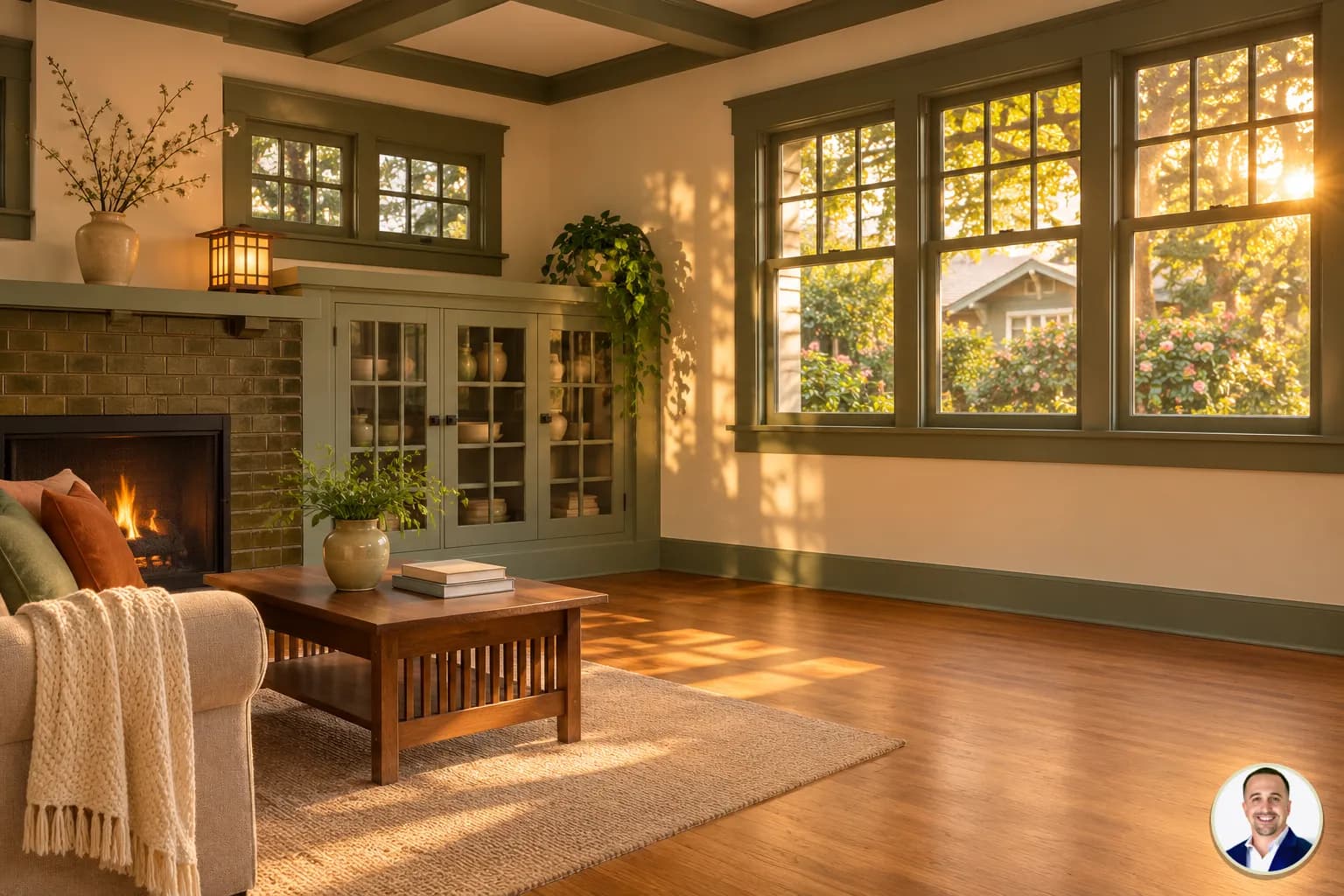
I would not strip original Craftsman woodwork until I know whether the paint contains lead. I’m Justin Borges, a Pasadena and San Gabriel Valley realtor, and while original woodwork can be worth uncovering, a home built before 1978 may have lead-based paint, so test first and use a lead-safe process instead of dry sanding or burning it off yourself.
The finish you see on a showing is only part of the story. Before an offer or a project, I would look at the condition of the paint, the character of the rooms and the scope of work you actually want. The goal is a home you can enjoy with a plan for its historic details and the people working on them.
Ready to move forward? Let's talk.
What might be under the paint, and should you uncover it?
Wood trim, doors and built-ins can give a Craftsman room its sense of continuity. A natural finish can show grain and variation across those surfaces. Stripping may reveal attractive wood, but the result is not guaranteed to be uniform or to match the picture you have in mind. I would compare a retained painted finish with the possible exposed wood before committing to the whole room.
In Pasadena’s Bungalow Heaven, where Craftsman houses are part of the district’s history, painted trim can be part of a home’s story too. SurveyLA notes that lighter painted trim and plaster walls appeared in bungalows as tastes changed, so a painted surface is not proof that the woodwork is a replacement. See the SurveyLA historic context.
| Choice | What to consider |
|---|---|
| Keep a painted finish | Retains the painted appearance; evaluate the paint’s condition and any planned disturbance. |
| Uncover the wood | May reveal grain and variations; the underlying finish and condition need assessment, and removal needs a lead-safe plan. |
If you are weighing the whole house, start with my guide to restoring or renovating a Craftsman. You can also call me at (213) 262-5092 to talk through a property you are considering.
Ready to move forward? Let's talk.
Why does the lead question come before the finish?
The federal government banned the sale of lead-based paint for residential use in 1978, according to the EPA RRP program. For an older Pasadena bungalow, that date makes the age of the house a reason to investigate, not a test result for a particular piece of trim.
California’s Department of Public Health says lead paint in good condition is usually not hazardous. Chipping, cracking or flaking paint, and paint disturbed during renovation, can create hazardous chips and dust. Children and pregnant people are especially vulnerable. CDPH recommends testing the areas before work and involving a certified lead supervisor. See CDPH homeowner guidance.
I would make a list of the actual components you want to alter: a door casing, built-in, baseboard or window. That gives the professional a clear scope to assess. It also helps you decide whether a full removal is necessary to get the appearance you want. If you are comparing homes and want to talk through inspection priorities, text me.
Ready to move forward? Let's talk.
How should you test the woodwork?
For a Pasadena bungalow or another older home in the San Gabriel Valley, CDPH advises hiring a certified lead Inspector/Assessor to test the areas before repainting, remodeling or renovation. Ask for the findings in writing and identify the surfaces included, so your contractor can plan around the work you actually intend to do.
EPA recognizes certain test kits for RRP compliance when used by qualified professionals. Its lead test kit guidance, explains that recognized kits differ by surface: the Massachusetts kit is recognized for drywall and plaster, not wood. EPA also discusses laboratory analysis and X-ray fluorescence testing. A store-bought test you perform yourself should not be treated as a contractor’s compliance clearance.
Under 40 CFR 745.82, specified professional testing or laboratory results can affect whether the federal renovation rule applies to particular components. One result does not necessarily describe every painted surface in the house.
Testing cost and turnaround vary with the scope and provider. Ask the certified Inspector/Assessor for a quote and expected report date before scheduling. For a broader look at due diligence, read the inspection items for a Pasadena Craftsman. If you want help organizing the questions for a showing, call me at (213) 262-5092.
Ready to move forward? Let's talk.
Who can do the work, and what methods are restricted?
For a Pasadena Craftsman, the EPA Renovation, Repair and Painting rule, under 40 CFR Part 745, generally covers renovation for pay that disturbs painted surfaces in most homes built before 1978. Covered firms must be certified and their workers trained in lead-safe practices. There are exceptions, including certain documented test results and limited minor work. The EPA program page and applicability rule, explain the scope.
California has its own lead-related construction requirements. CDPH says paid lead inspections and risk assessments in residential buildings require a CDPH-certified Inspector/Assessor. Work designed to reduce or eliminate lead hazards requires a certified Lead Supervisor or Worker; the type of work matters. Check the credentials and scope against CDPH certification guidance. Ask a licensed contractor to put the lead-safety procedures in the written contract.
Dry sanding can spread hazardous dust; burning paint can expose people to toxic fumes. For covered RRP work, 40 CFR 745.85, prohibits open-flame burning and restricts high-speed paint removal unless the equipment has required containment and HEPA vacuum attachments. It permits heat guns only below 1,100 degrees Fahrenheit. That temperature limit is a rule for the professional, not an invitation to experiment at home.
Ask how the work area will be contained, how dust and debris will be handled, and how the space will be checked after work. If windows are part of the plan, see whether original Craftsman windows are worth keeping. You can text me with questions about fitting these steps into your purchase timeline.
Ready to move forward? Let's talk.
How do you protect the character while deciding?
In a Pasadena Craftsman, I look at the room as a whole before choosing a finish for an individual piece. Door and window surrounds, built-ins and the relationship between rooms can work together visually. The National Park Service’s guide to architectural character, recommends examining spaces, features and finishes as part of understanding a building.
Keeping paint is a valid preservation choice. NPS cautions in its exterior woodwork guidance, that harsh removal can damage wood and erase evidence of historic finishes. Its rehabilitation standards, favor preserving distinctive finishes and using the gentlest effective treatment. If a Pasadena home has a Mills Act contract, which transfers to a buyer, the city requires work affecting historic features inside or out, including stripping original woodwork, to meet the Secretary of the Interior’s Standards and get a Certificate of Appropriateness. Ask the seller and the city whether a contract is recorded; my restoration guide covers the contract.
Consider how the trim relates to other plans as well. My guides to opening a Craftsman floor plan and adding a second story explain the broader decisions. To discuss a particular home, call me at (213) 262-5092.
Ready to move forward? Let's talk.
What should buyers and sellers check before work begins?
For a pre-1978 Pasadena or San Gabriel Valley home, review the federal lead-based paint disclosure materials and any available records with your agent. A disclosure is useful information, but it does not tell you what is beneath every layer of paint. CDPH says the federal disclosure rule gives California buyers 10 days to inspect for lead with a certified Inspector/Assessor; discuss the contract and timing with your agent. See CDPH certification guidance.
- Identify the painted features you hope to change and note visible deterioration without disturbing them.
- Review disclosures and available reports; ask what is known and what remains untested.
- Arrange a CDPH-certified Inspector/Assessor for the areas in your proposed scope.
- Ask qualified professionals which credentials and lead-safe methods the job requires, and get the procedures in writing.
- Compare a retained painted finish with removal after you understand the condition and the work involved.
- Keep the report and work records with your home documents for future planning.
A general inspection and a lead assessment answer different questions. My guide to specialist inspections for an older house can help you decide whom to consult. If you would like to talk through a purchase, text me.
Ready to move forward? Let's talk.
Frequently asked questions
Does painted Craftsman trim mean the woodwork is not original?
No. SurveyLA notes that lighter painted trim appeared in bungalows of the period, so paint alone does not establish that the woodwork was replaced. I would assess each component before deciding to strip it.
Can I test old trim with a hardware-store lead kit?
Ask a CDPH-certified Inspector/Assessor to assess the areas before work. EPA recognizes certain kits for RRP compliance when used by qualified professionals, and not every recognized kit is suitable for wood.
Is intact lead paint always an immediate hazard?
CDPH says lead paint in good condition is usually not hazardous, but chipping or disturbing it can create hazardous dust and chips. Have a qualified professional assess the condition and your planned work.
For help weighing inspection questions on a Pasadena Craftsman, call me at (213) 262-5092.
Can a contractor use a heat gun on lead-painted trim?
During an RRP renovation, federal rules prohibit open-flame burning and restrict heat guns to temperatures below 1,100 degrees Fahrenheit. Ask the qualified contractor how the work will be contained and performed safely.
Do I have to strip every painted surface to restore a Craftsman?
No. Keeping a painted finish is a valid choice. Assess the condition and character of each feature with a preservation professional and address any lead hazards before disturbing paint.
What should a buyer ask about lead before closing?
Review the lead disclosure and available records, discuss the inspection opportunity and deadlines with your agent, and arrange a CDPH-certified Inspector/Assessor if you want the affected areas tested.
Ready to move forward? Let's talk.
Sources
- City of Pasadena, Historic Property Contract Program Guidelines, checked 2026-11-05
- EPA, Renovation, Repair and Painting Program, checked 2026-11-05
- 40 CFR 745.85, Work Practice Standards, checked 2026-11-05
- 40 CFR 745.82, Applicability, checked 2026-11-05
- EPA, Lead Test Kits, checked 2026-11-05
- CDPH, Is Lead Certification Required for the Work I Do?, checked 2026-11-05
- CDPH, Hire a Lead Professional to Work in Your Home, checked 2026-11-05
- SurveyLA, Arts and Crafts Movement Historic Context, checked 2026-11-01
- National Park Service, Preservation Brief 10: Exterior Paint Problems, checked 2026-11-05
- National Park Service, Preservation Brief 17: Architectural Character, checked 2026-11-05
- National Park Service, Standards for Rehabilitation, checked 2026-11-05
For help putting these questions into your home search, text me.

Justin Borges
Team Lead, The Borges Real Estate TeamDRE #01940318
With over 13 years in Southern California real estate, Justin specializes in probate sales, trust properties, and character homes. His expertise in 1031 exchanges and historic preservation has helped hundreds of clients navigate complex real estate transactions.