I'm Justin Borges, and I specialize in Craftsman and character homes across Pasadena and the San Gabriel Valley. Yes, you can add a second story to some Craftsman bungalows, but the design and city review matter. It changes the profile, roofline and proportions more than almost any other alteration, so first ask what it would do to the home's character and what the city will allow; for a landmarked home or one in a historic district, the city's design review decides whether the proposal is appropriate.
Before you fall in love with an upstairs bedroom, walk across the street and look at the roof, the porch and how the house sits among its neighbors. Then bring the address and a clear description of your idea to the city. I want buyers and owners to understand the constraints before making plans around extra space.
Ready to move forward? Let's talk.
What makes a bungalow’s profile worth protecting?
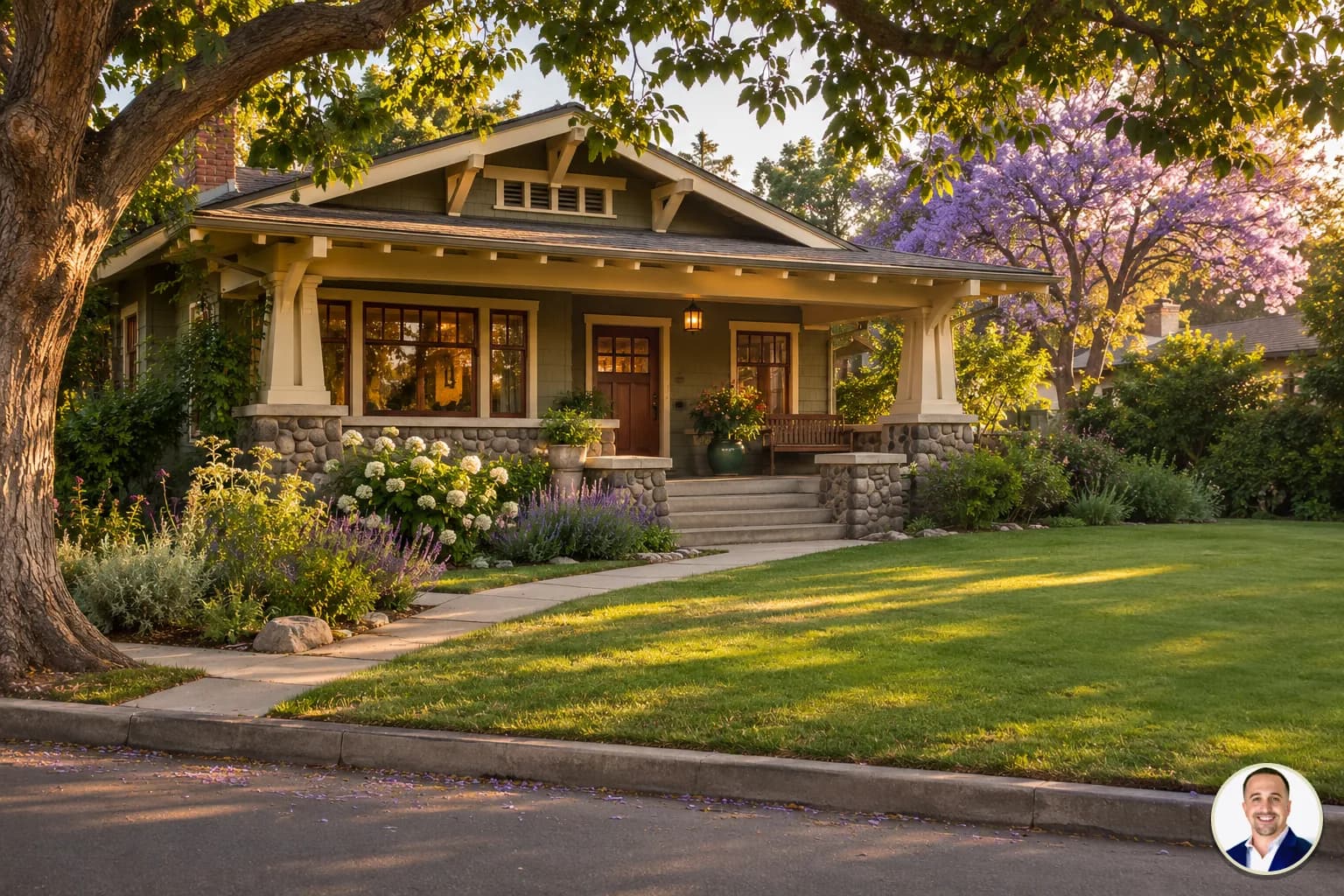
A bungalow often feels connected to the ground. Its broad roof, projecting eaves and welcoming porch pull your eye horizontally, while windows, siding and porch supports give the front a rhythm. Pasadena's historic district design guidelines, describe extended eaves, exposed rafters and bands of windows among California bungalow features. In Bungalow Heaven, the city’s conservation plan identifies a neighborhood rich in Craftsman houses; I look at each house’s own roof and porch before deciding what defines it.
An upper floor can change that impression even when the porch remains. Raising the roof or placing a large wall directly above the front can make the original house look like the base of a taller building. The question is whether the original roof and porch still read as the dominant composition, not simply whether the new siding resembles the old.
My guide to whether to restore or renovate a Craftsman can help you identify features to carry forward. To discuss a home, call me at (213) 262-5092.
Ready to move forward? Let's talk.
What might a more respectful addition look like?
Start with a design that leaves the front facade and porch intact and places new space back from the street. A set-back addition that is difficult to see from public views may let the existing roof and porch remain the first things people notice. Ask your designer to show the house from the sidewalk, across the street and at an angle, not just in a floor plan.
The National Park Service's guidance on exterior additions, recommends additions subordinate to the historic building and explains that a rear or secondary-side location can reduce visibility. It cautions that a full floor on a small historic building is seldom appropriate because it changes proportions and profile. That is a reason to examine alternatives carefully, not an automatic ruling on your address.
I would compare a rear addition, a smaller upstairs area, or a separate ADU against the space you need. Pasadena allows new attached and detached ADUs in historic districts when they are not visible from the public right-of-way; confirm the rules for the property with the city. A rear addition keeps the extra space connected to the house, while an ADU provides separate space. Costs and review times vary, so get a project-specific estimate from your design team and the city. If rooms are the issue, read our guide to opening a Craftsman floor plan. You can text me to discuss the tradeoffs.
Ready to move forward? Let's talk.
Which design choices deserve a closer look?
| Element | Approach to explore | Potential concern |
|---|---|---|
| Placement | Set the addition back and study public views. | A large upper wall flush with the front. |
| Roof | Relate the new roofline to the existing form. | A dominant new profile replacing the visible low roof. |
| Materials and windows | Use compatible materials and patterns. | Openings and finishes that ignore the existing rhythm. |
| Porch | Keep the porch and entry legible. | A porch dwarfed by a much larger mass. |
Compatibility does not mean pretending new work is old. The Secretary of the Interior's Standards for Rehabilitation, call for additions that do not destroy historic materials, are distinguishable from old work and are compatible in massing, size, scale and features. They also envision an addition removable without impairing the historic property's essential form and integrity.
For a Bungalow Heaven property, I would compare those principles with the district’s conservation plan and the actual view from the street. The city can explain which standards apply to the project. To discuss a property, call me at (213) 262-5092.
Ready to move forward? Let's talk.
What should you ask Pasadena before buying or designing?
Give Planning the address and describe the space you hope to add. Ask which zoning district and overlays apply, what limits and setbacks govern the lot, and whether a compatibility permit or another review is needed. Do not assume a neighbor's project establishes what your lot permits. Pasadena's single-family standards ordinance, sets out compatibility provisions for certain properties and excludes some districts and overlays. Ask staff to identify the current rules for your address and proposal.
Separately, ask Design & Historic Preservation whether the property is designated, whether it lies in a historic district and what design review applies. Pasadena's historic preservation page, describes Certificates of Appropriateness for work in designated historic sites and districts. Its designation guidance, says staff review minor projects and the Historic Preservation Commission reviews major ones.
Pasadena says its preservation staff offer free consultations, and there is no Certificate of Appropriateness fee. In Bungalow Heaven, the conservation plan distinguishes staff review from Commission review for contributing houses; other districts have their own plans. Bring photographs, a sketch and questions, and ask Planning whether another pre-application discussion is available. A consultation helps identify issues; it is not approval. See what buying a landmarked Craftsman can mean and when exterior changes need city review. You can text me as you prepare.
Ready to move forward? Let's talk.
Who checks whether the existing house can support the work?
Ask a qualified design professional and structural engineer to evaluate the existing house and proposed work. An attractive sketch does not answer how the addition connects to the building, what existing material must be disturbed or what approved plans will require. Have the team explain those questions in plain language before settling on a design.
In a Pasadena bungalow built before 1978, opening walls or roof framing can disturb painted surfaces. My guide to stripping original Craftsman woodwork explains lead-safe planning; the EPA rule, federal definition of minor repair and CDPH guidance provide the underlying requirements and recommendations. Under EPA’s RRP rule, a contractor paid to do this work must be a lead-safe certified firm using trained workers, and demolishing painted surfaces never counts as exempt minor repair. CDPH recommends having a certified lead Inspector/Assessor test the affected areas first.
Talk to Pasadena Building & Safety about permits and plan review. Its permit guidance, says most construction projects require a building permit, and work exempt from a building permit may still require a zoning permit. Ask what drawings and technical information the divisions need for this house.
If it is a qualified historic building, ask whether the California Historical Building Code is available. The state's code guidance, describes alternative standards for qualified historic buildings; Pasadena says owners may request reasonable alternatives. The city determines what applies. Engineering costs and plan-review timing vary; ask your engineer for a written estimate and Building & Safety for the expected review path. For help finding a home that fits your plans, call me at (213) 262-5092.
Ready to move forward? Let's talk.
Why look beyond the property line?
In Bungalow Heaven, I would look at the whole streetscape as well as the house. An addition can alter what neighbors see from windows or yards, and a tall profile can change the rhythm of a block. Stand at several points along the street and ask your designer to illustrate the proposal from each. Consider privacy, sight lines and how the roof relates to nearby houses. A conversation with neighbors can reveal concerns a drawing viewed at the kitchen table misses.
Ask Planning whether notice, story poles or a compatibility process apply. The city's single-family ordinance describes notice and story poles for certain upper-story additions requiring a compatibility permit. For an upper-story addition requiring a compatibility permit, the ordinance calls for story poles and notice. Staff can tell you whether that process applies to your address. Listening early is useful, but neither a neighbor's support nor a preliminary conversation guarantees the city's decision.
Inside, think about where stairs would go and what original rooms or finishes they would displace. Our guides to original woodwork and original windows identify features to discuss with your designer. For space needs, read whether a bungalow is too small for a family. You can text me about homes you are comparing.
Ready to move forward? Let's talk.
What should be on a buyer’s checklist?
- What space do I need, and could an existing room or less visible addition meet that need?
- Is the home designated or in a district or overlay? What review applies?
- What zoning, setbacks and compatibility requirements apply to the lot and concept?
- Can the facade, porch and significant roof form remain legible from the street?
- What do Planning, preservation staff and Building & Safety need to evaluate the proposal?
- What does an engineer need to examine, and what original material might the work affect?
- How will the design appear from the street and neighboring properties?
For a contributing Bungalow Heaven house, a street-visible rear addition taller than the house goes to Commission review under the district plan. Keep the answers with your property research before committing to a purchase that depends on an addition. My guide to buying a Craftsman in Pasadena covers the wider decision. To review your search criteria, call me at (213) 262-5092.
Ready to move forward? Let's talk.
What else do buyers and owners ask?
Does a Pasadena bungalow need historic review for an addition?
Pasadena requires a Certificate of Appropriateness for additions within designated historic sites and districts. Ask Design & Historic Preservation staff about the specific address.
Will a setback guarantee approval?
No. A setback can reduce visibility, but the city reviews the actual proposal under the requirements that apply to the property.
Can I keep the front porch and add space upstairs?
Keeping the porch is a useful design goal, but the roof, structure and connection to the existing house also need review. Ask a design professional and the city to assess the proposal.
Should I ask the city before making an offer?
Yes. If the purchase depends on adding space, ask Planning and Building & Safety about the address and project before committing, and discuss the answers with your agent and design professionals.
Do federal rehabilitation standards automatically apply to every private home?
No. They govern the federal tax-incentive program. For a private home, their application depends on local rules or a contract.
What if an upper floor changes my neighbors’ views?
For upper-story additions requiring a compatibility permit, Pasadena’s ordinance calls for notice and story poles. Study the proposal from the street and neighboring properties and confirm the process with Planning.
For a specific home, the answer depends on its designation, lot and proposal. You can text me to discuss your search.
Ready to move forward? Let's talk.
Sources
- Pasadena Design Guidelines for Historic Districts, checked 2026-11-01
- NPS New Exterior Additions to Historic Buildings, checked 2026-11-05
- Secretary of the Interior’s Standards for Rehabilitation, checked 2026-11-05
- Pasadena Ordinance No. 7371, checked 2026-11-05
- Pasadena Historic Preservation, checked 2026-11-05
- Pasadena Historic Designations and Property Incentives, checked 2026-11-05
- Pasadena Apply for Permit, checked 2026-11-05
- California Historical Building Code, checked 2026-11-05
- EPA Renovation, Repair and Painting Program, checked 2026-11-05
- 40 CFR 745.83, checked 2026-11-05
- CDPH Hire a Lead Professional, checked 2026-11-05
- Bungalow Heaven Conservation Plan, checked 2026-11-01
- Pasadena Accessory Dwelling Units, checked 2026-11-01
Ready to discuss a Pasadena home? call me at (213) 262-5092 and tell me what you are looking for.

Justin Borges
Team Lead, The Borges Real Estate TeamDRE #01940318
With over 13 years in Southern California real estate, Justin specializes in probate sales, trust properties, and character homes. His expertise in 1031 exchanges and historic preservation has helped hundreds of clients navigate complex real estate transactions.