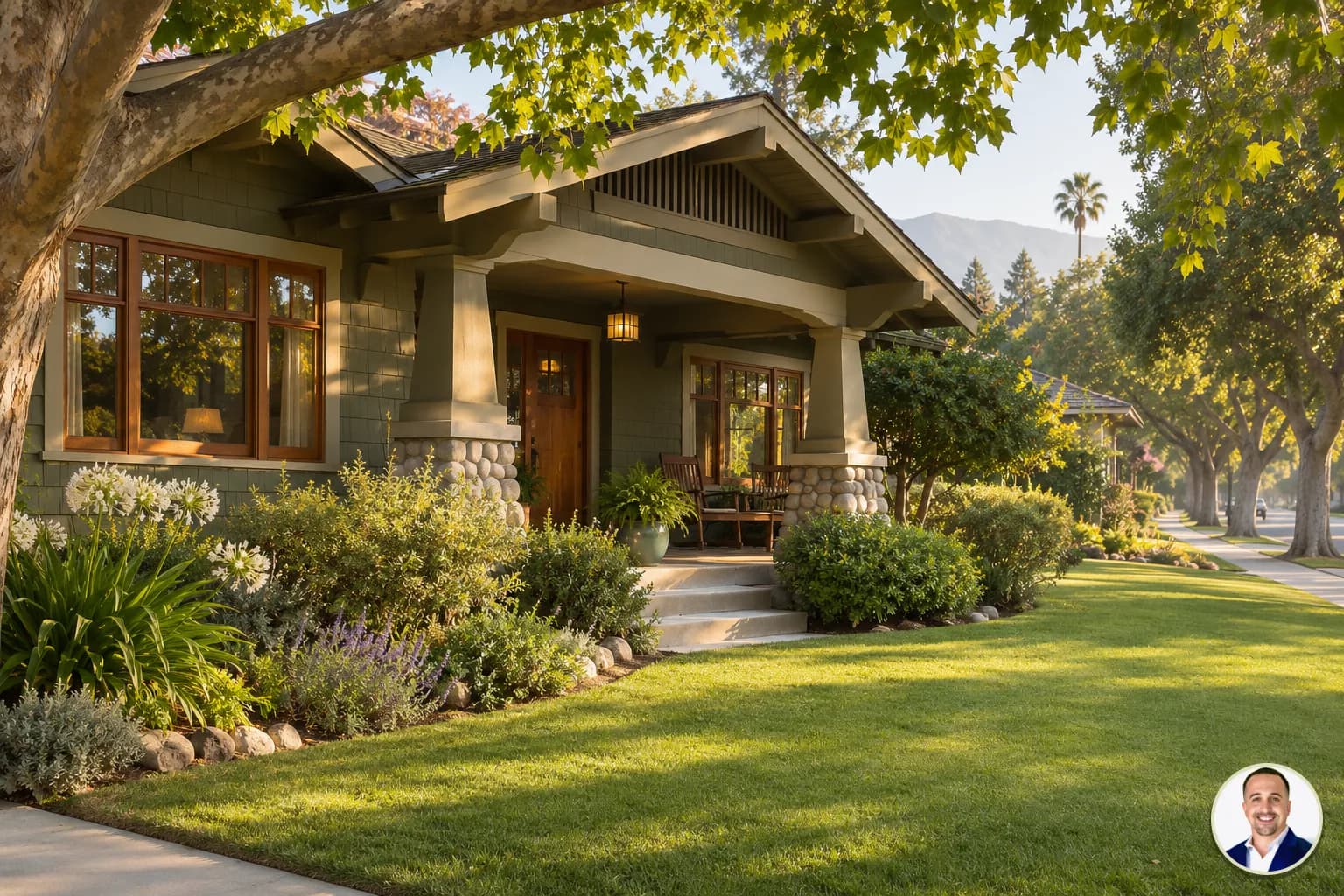
An unimproved Craftsman bungalow will often be less energy efficient than a newer home because it may lack insulation and air sealing. I’m Justin Borges, a Pasadena and San Gabriel Valley realtor. Updates matter, so check the attic, walls, windows and equipment before judging a particular house.
A charming porch and original woodwork tell you a lot about a home's character. They do not tell you what is behind the walls or how well the heating system works. I put energy questions on the inspection list alongside the foundation, roof and other systems. Craftsman homes can be found in Pasadena’s Bungalow Heaven; their character is worth protecting while you investigate comfort and energy use.
Ready to move forward? Let's talk.
Where does a bungalow lose or gain heat?
Think of the house as a whole. Heat moves through the roof and attic, exterior walls, windows and floors over a crawlspace. Air can also move through openings around doors, window frames, pipes and the attic entrance. In warm weather, unwanted heat can enter; in cooler weather, heated indoor air can escape. Insulation and air sealing address different parts of that picture.
The DOE's Energy Saver Guide identifies the attic, walls, windows and doors among the places to examine, along with penetrations and ducts. Ducts that leak into an attic or crawlspace can lose conditioned air before it reaches the rooms. DOE recommends qualified professional testing of duct sealing for proper airflow and combustion safety. (Checked 2026-11-05.)
Drafts and uneven temperatures are useful clues, but a comfortable room does not reveal the condition of hidden areas. I suggest asking your inspector what is visible safely and what needs a closer look. Start with the attic entrance, window frames and accessible ducts: those are places where the DOE guide directs attention. Our guide to inspecting a Pasadena Craftsman gives those questions a wider context.
If you want to talk through a property you are considering, call me at (213) 262-5092.
What should I compare with a newer home?
Compare documented conditions, not just the listing description. An upgraded bungalow can outperform an unimproved one, while a newer home was built under a later code edition. The California Energy Commission says its 2025 Energy Code applies to permit applications submitted on or after January 1, 2026; its requirements for newly constructed residential buildings include heat pumps. (CEC standards, checked 2026-11-05.)
| Older Craftsman bungalow | Newer home |
|---|---|
| Attic or walls may lack insulation; inspect accessible areas and records. | Built to the energy code in force when it was permitted; the 2025 Energy Code covers only permit applications submitted on or after January 1, 2026 (CEC). |
| Original single-pane windows can be improved with exterior storm windows, a DOE option. | For new windows, DOE recommends looking for ENERGY STAR and NFRC labels. |
| Heating and cooling equipment may have been replaced; check its service history and any ducts. | Equipment depends on when and how it was built; check the actual system and its records. |
| Utility bills reflect the previous occupants and their use. | Utility bills also reflect occupants and use, so compare the records with the equipment and conditions. |
Request invoices and permits for upgrades, then compare the attic, windows and equipment in both homes. The January 1, 2026 application date is a code anchor, not a prediction of either home’s utility bill. The DOE guide explains the window options and labels. (DOE and CEC, checked 2026-11-05.)
Ready to move forward? Let's talk.
Which improvements usually come first?
My advice is to start with an energy assessment and a plan to seal uncontrolled air leaks, then consider attic insulation. DOE places insulation after air sealing in its guide. That sequence gives a contractor a chance to address openings around the attic entrance, wiring and other penetrations before insulation makes them harder to reach. (DOE, checked 2026-11-05.)
Before anyone air seals or adds insulation in the attic, check for vermiculite (pebble-like, gray-brown or silver-gold). The U.S. EPA, checked 2026-11-05, says to assume it contains asbestos, leave it undisturbed and hire a professional asbestos contractor before work that would disturb it.
Ask the professional to explain ventilation and combustion safety as part of the plan. If insulation and air sealing are already adequate but rooms remain drafty or too warm, DOE suggests that the equipment may not be functioning properly or the exterior walls may need insulation. It recommends consulting a home energy professional. Loose-fill insulation is one option DOE identifies for irregular cavities and attics with obstructions. (DOE, checked 2026-11-05.)
Wall insulation deserves a separate conversation because access can affect original finishes. If siding is being removed from an uninsulated wood-frame wall, DOE describes adding blown insulation to the empty cavities before new siding goes on. Get a written bid that shows how the work affects original finishes and which inspections or approvals it needs. The bid is where you get a project price; I cannot give you a reliable cost from a listing. DOE’s sequence is air sealing first, then insulation. (DOE, checked 2026-11-05.)
For help weighing the inspection questions before an offer, text me.
Do original wood windows have to go?
No. I do not put window replacement at the top of the list simply because the windows are old. Ask a qualified window professional to evaluate their condition, operation and fit. Weatherstripping can address gaps, and DOE identifies exterior storm windows as an option to consider for single-pane windows. Replacement with high-performance glass is another option. (DOE, checked 2026-11-05.)
Original windows contribute to the look of a Craftsman, so ask to see how a proposed storm window or replacement will look and operate. If you are considering new windows, DOE recommends looking for ENERGY STAR and NFRC labels. Its guide also discusses low solar heat gain coatings for warmer climates. Bring the details to your contractor and local building department before ordering. (DOE, checked 2026-11-05.)
For a closer look at the tradeoffs, read whether original Craftsman windows are worth keeping. For single-pane windows, DOE identifies exterior storm windows as an alternative to replacement. Compare their appearance and operation with a written replacement proposal. (DOE, checked 2026-11-05.)
Ready to move forward? Let's talk.
How does a home energy assessment work?
A certified energy auditor evaluates the home and helps prioritize improvements. DOE describes an in-depth assessment as an interview, inspection and testing, followed by recommended work and, where offered, evaluation after the work. Tests may include a house air leakage test, a duct leakage test or an infrared scan. Ask what is included before booking, including whether the professional offers follow-up testing. (DOE, checked 2026-11-05.)
Bring the utility bills you can obtain, describe rooms that feel uncomfortable and point out known upgrades. Ask for the findings in writing and for a clear explanation of which recommendations address air leaks, insulation or equipment. A useful report should help you discuss a sequence with qualified contractors, not simply hand you a shopping list.
DOE identifies Home Performance with ENERGY STAR, RESNET, the Building Performance Institute and some utilities as ways to find professionals. ENERGY STAR also discusses sealing and insulating as a way to address energy use. Request the assessor’s scope and a written price before booking. DOE’s assessment can include air leakage, duct leakage and infrared testing, so check which tests are included. (ENERGY STAR, Seal and Insulate, and DOE, checked 2026-11-05.)
For help coordinating your home search and inspection questions, call me at (213) 262-5092.
What about heating and cooling equipment?
After looking at the building envelope, have a qualified contractor evaluate the equipment's condition and size for the house. DOE cautions that an oversized air conditioner performs less efficiently and effectively than a properly sized smaller unit. A heat pump can provide heating and cooling by moving heat, and a contractor can assess whether it fits the house. (DOE, checked 2026-11-05.)
If the bungalow has ducts, ask where they run and whether they have been tested. If it does not, discuss the routes, visible equipment and work required before choosing a system. My guide to adding heating and cooling without ductwork walks through the planning questions. Keep service records and ask the contractor what maintenance the chosen system needs.
Southern California's generally milder climate changes the heating and cooling context compared with colder regions, but a mild climate does not make a specific house comfortable by itself. Exposure, drafts and equipment still matter. DOE notes that shading, insulation, efficient windows and doors, fans and ventilation can help keep homes cool. Get a written equipment bid that identifies the proposed routes and work. (DOE, checked 2026-11-05.)
Ready to move forward? Let's talk.
When does California's energy code come into play?
The California Energy Commission says the 2025 Building Energy Efficiency Standards apply to projects with permit applications submitted on or after January 1, 2026. Its compliance manual explains that local authorities, generally city or county building departments, issue permits and enforce the Energy Code for applicable new buildings, additions and alterations. Ask the local department and your contractor how the rules apply to your particular scope. (CEC standards and compliance manual, checked 2026-11-05.)
The CEC says installation of a space-conditioning appliance requires a building permit, except for a plug-in room appliance. Its HVAC guidance also addresses load calculations and testing for specified work. The CEC's standards page describes heat pump requirements for newly constructed residential buildings; it does not say every existing Craftsman must switch. For the project price, request a written bid and consult the city’s fee schedule. The 2025 standards apply to permit applications submitted on or after January 1, 2026. (CEC HVAC FAQs, checked 2026-11-05.)
If you are comparing homes and their likely projects, text me.
What should a buyer ask before an offer?
Request available utility bills, then ask what period they cover and whether equipment or occupancy changed. Bills describe someone else's use of the house, so I use them as context rather than a forecast of your own bills. Ask for the age and service history of the heating and cooling equipment, and find out whether the house has ducts.
Ask the inspector to report the visible attic insulation and its depth, whether wall insulation can be verified, and the condition of accessible windows and doors. Ask what could not be inspected as well. If the answers are incomplete, discuss an energy assessment and any specialist inspection within your transaction timeline. Our article on when to consider a specialist inspector can help frame that conversation.
Ownership is more than the utility bill. Consider the work alongside annual maintenance and the practical question of storage and closets. For the broader picture, see what it is really like to own a Craftsman. Make the inspection and any specialist assessment fit within the investigation-contingency window in your offer; that is the time to resolve the questions before deciding how to proceed.
Ready to move forward? Let's talk.
Questions buyers ask about Craftsman energy use
Are original Craftsman windows always worth replacing?
No. The Department of Energy identifies storm windows as an option for homes with single-pane windows. Ask a window professional to assess the existing windows and discuss weatherstripping, storm windows and replacement before deciding. (DOE, checked 2026-11-05.)
Can I tell how efficient a bungalow is from its age?
Not reliably. Ask what has been updated and have the attic, walls, windows, doors, equipment and any ducts evaluated. A home energy assessment can help identify and prioritize improvements. (DOE, checked 2026-11-05.)
Should I insulate the attic or replace the heating system first?
Start with an assessment of the house and equipment. DOE recommends considering insulation after air sealing; the condition of the existing system and the assessment findings should guide the order of further work. (DOE, checked 2026-11-05.)
To discuss the next step for a home you are considering, call me at (213) 262-5092.
Does a home energy assessment replace a home inspection?
No. An energy assessment focuses on energy use and improvements; ask your inspector about the scope of the general inspection and any further specialist evaluations you may need. (DOE, checked 2026-11-05.)
Does Title 24 mean I must install a heat pump in an existing Craftsman?
No. The California Energy Commission describes the heat pump requirements on its standards page in connection with newly constructed residential buildings. Ask the local building department and your contractor which requirements apply to your proposed alteration. (CEC, checked 2026-11-05.)
Can utility bills predict what I will pay?
No. They are useful context for comparing the home’s past use. Ask for the available bills and discuss them alongside the home’s equipment, condition and your own expected use with an energy professional.
Ready to move forward? Let's talk.
Sources
- U.S. Department of Energy, Energy Saver Guide, checked 2026-11-05
- U.S. Environmental Protection Agency, Protect Your Family from Asbestos-Contaminated Vermiculite Insulation, checked 2026-11-05
- ENERGY STAR, Seal and Insulate, checked 2026-11-05
- California Energy Commission, 2025 Building Energy Efficiency Standards, checked 2026-11-05
- California Energy Commission, Single-Family Residential Compliance Manual, Chapter 2, checked 2026-11-05
- California Energy Commission, Single-Family HVAC FAQs, checked 2026-11-05
For help finding a home and planning your questions, text me.

Justin Borges
Team Lead, The Borges Real Estate TeamDRE #01940318
With over 13 years in Southern California real estate, Justin specializes in probate sales, trust properties, and character homes. His expertise in 1031 exchanges and historic preservation has helped hundreds of clients navigate complex real estate transactions.