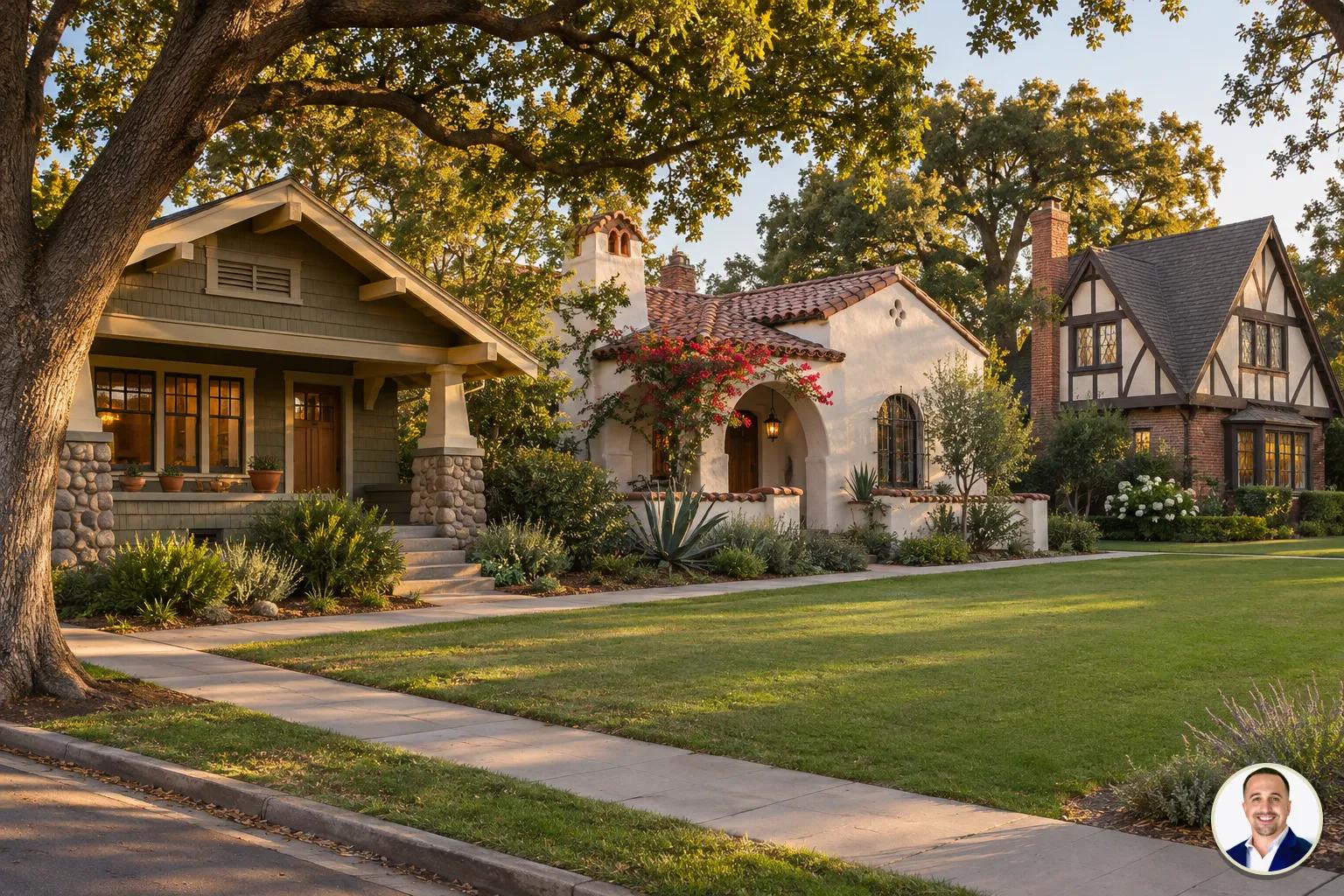
The easier home to maintain is the one with the better condition and repair history, rather than a particular architectural style. Craftsman wood needs paint to exclude moisture; Spanish Revival stucco and clay tile roofs need careful repair; Tudor woodwork and masonry call for attention to paint and compatible mortar. As a Pasadena and San Gabriel Valley agent, I am Justin Borges, and I walk buyers through these inspection questions.
When we tour homes in Pasadena and the San Gabriel Valley, I want buyers to look beyond the finish they can see on the day of a showing. A well-documented repair history and a careful inspection can tell you more about the work ahead than the style name on a listing. For help recognizing the styles, see my guide to Tudor, Spanish Revival and Craftsman homes.
Ready to move forward? Let's talk.
What should you compare before choosing a style?
Start with the actual materials at the house, then use the same questions for each property: What can we see? What has been repaired? Who should look closer? A seller’s records and an inspector’s observations give you a basis for a more useful conversation than an attractive exterior alone.
| Home | Look closely at | Ask about |
|---|---|---|
| Craftsman | Wood siding, paint, porch and exposed trim | Painting, moisture concerns and porch repairs |
| Spanish Revival | Stucco, plaster and clay tile roof | Cracks, leaks, roof work and matching repairs |
| Tudor | Half-timbering, masonry or stucco, windows | Trim, masonry, window and moisture repairs |
If you are weighing homes with different repair histories, call me at (323) 673-2597. I compare visible materials, repair records and inspection findings, then use specialist follow-up where the inspection calls for it.
Ready to move forward? Let's talk.
Craftsman paint work: know the 20 and 6 square foot lead limits
Walk around the siding and porch rather than stopping at the front steps. Note peeling paint, exposed wood, stains and areas that look different from their surroundings. Look at window sills, under the eaves and near gutters and downspouts, then point out anything that raises a question to your inspector. Inside the porch, note the condition of accessible surfaces.
The National Park Service guide to exterior paint on historic woodwork explains that paint helps exclude moisture and that harsh paint removal can damage wood. In a pre-1978 home, paid paint work that exceeds the federal minor-repair limits of 20 square feet outside or 6 square feet per room inside, as well as window replacement, generally requires an EPA- or state-certified firm; the rule generally does not apply to owners working on their own homes, though EPA recommends lead-safe practices. That makes the preparation and reason for a repair worth discussing, not just the color of a fresh coat.
You can text me about a Craftsman inspection. I review painting and siding records, porch work and evidence of moisture. For more, read what maintaining an older Craftsman involves.
Ready to move forward? Let's talk.
What should you look for on a Spanish Revival?
Look at the stucco from several angles and make a note of cracks, patches and staining. Inside, note plaster repairs and review the cause of any patch with the seller and inspector.
Pasadena’s historic district design guidelines advise maintaining original stucco coatings over masonry and repairing the deteriorated portion. They also advise preserving original roofing material in good condition. The material and condition of the particular wall or roof matter when discussing an appropriate repair.
For a clay tile roof, ask for a qualified roofer’s assessment and any invoices or photographs from earlier work. Have the roofer assess the roof beneath the visible tiles and review how any reported leak was addressed. Do not climb onto the roof during a showing.
To discuss a property, call me at (323) 673-2597. My guides to stucco cracks and clay tile roof repairs offer more questions about the walls and roof.
Ready to move forward? Let's talk.
What should you look for on a Tudor?
Follow the half-timbering and surrounding wall surfaces with your eyes. Note peeling finishes, stains, cracks and areas where a repair appears to have been made. Check accessible windows with the inspector for operation and signs of prior repairs.
SurveyLA’s Period Revival context statement describes ornamental false half-timbering on Late Tudor Revival buildings. The NPS woodwork guide discusses paint and moisture on exterior wood. I note questionable trim and adjoining surfaces for follow-up.
Where brick or a chimney needs attention, request a mason familiar with historic masonry. The NPS guide to repointing historic masonry explains why replacement mortar must be compatible with the existing masonry and historic mortar. Review the scope and materials used in previous masonry repairs.
If a house has you wondering where to start, text me. My guide to common Tudor Revival concerns covers more questions about trim, windows and masonry.
Ready to move forward? Let's talk.
What should an inspector and specialists check?
I suggest sharing the seller’s disclosures and available repair records with your general inspector and pointing out the areas you noticed on the walk-through. Ask the inspector to explain what was accessible, what could not be evaluated and which observations call for further review. The C.A.R. Residential Purchase Agreement specifies 17 days after acceptance for investigation of the property by default; the period can be changed by agreement. Check the timeline in your agreement when arranging inspections.
Depending on the house and the findings, that follow-up might involve a roofer, a stucco contractor, a mason or someone experienced with historic wood and windows. Have each professional explain the condition, possible causes and proposed work, including any limits on what can be seen behind a patch.
In a Pasadena landmark district, city guidance says routine maintenance is exempt from historic review, while street-visible exterior alterations need a Certificate of Appropriateness. If the house is an individual landmark or has a recorded Historic Property Contract (Mills Act), work on historic features can need a Certificate of Appropriateness. The contract transfers to the buyer, so ask the seller whether one is recorded and check the city’s designated-properties database. A building permit may still be needed. If you want help organizing your search, call me at (323) 673-2597. Put the findings beside the seller’s paperwork: an invoice shows what a contractor was hired to do, while a current assessment describes what is visible now.
Ready to move forward? Let's talk.
What should you ask the seller about past work?
Ask for a history of leaks, cracks, wood repairs, window work and roof work, including dates, invoices, warranties and any photographs the seller has. Review the cause, whether the concern returned and any warranty terms. A record that says a roof was repaired is more useful when you know which area was addressed and why.
Buyers can also ask which features the seller believes are original and which have been replaced. The answer can help you frame questions for an inspector, even when the seller does not know every detail. I compare those answers with the inspection findings.
For ongoing care, the NPS exterior maintenance guide recommends regular attention to roofs, drainage, walls, porches and windows. Its inspection chart calls for a roofer to inspect the roof and a mason to inspect chimneys every 5 years. It also says windows and shutters may need repainting every 5 to 7 years, depending on exposure and climate. If you are comparing records from different properties, text me.
Ready to move forward? Let's talk.
How do you make a practical decision?
After inspections, make a property-specific list: work a specialist recommends addressing, items to monitor, questions still open and documents you need. Ask the professionals to distinguish an observed condition from a suspected cause. Where access was limited, decide what further information you need before you are comfortable proceeding.
In the Arroyo Seco area, including Highland Park, Pasadena and South Pasadena, I pay particular attention to Craftsman wood siding and porches. Pasadena’s draft historic context statement identifies the area as a major Arts and Crafts center and describes these Craftsman features.
You can call me at (323) 673-2597 to talk through homes in Pasadena and the San Gabriel Valley. If the playful look of a Tudor is part of your search, see my guide to finding storybook-style homes in Los Angeles County.
Ready to move forward? Let's talk.
Frequently asked questions
Is a Craftsman easier to maintain than a Spanish Revival?
Compare the condition and repair history: Craftsman wood siding and porches need attention to paint and moisture, while Spanish Revival stucco and clay tile roofs need careful inspection and repair.
Should a stucco crack stop me from buying?
A crack is a reason to ask questions, not a diagnosis by itself. Show it to your inspector, ask about its history and find out whether a stucco specialist should examine it.
Can a clay tile roof be evaluated from the ground?
A ground-level view can help you notice concerns, but it does not replace an evaluation by a qualified roofer. Ask about the roof beneath the visible tile and request records of prior work.
For questions about a particular listing, text me and we can discuss what to investigate.
What should I ask about Tudor half-timbering?
Ask what work has been done, whether moisture or deterioration was found and whether records or photographs are available. Compare those answers with the visible condition of the trim.
Are original windows always a problem?
Original windows deserve an individual assessment. Check whether they open and close and ask what repairs have been made.
What if the seller has no repair records?
Ask what the seller knows and whether any contractors can be identified. Compare what the seller knows with what you can see during the inspection.
To talk through an inspection or repair history, call me at (323) 673-2597.
Sources
Sources checked 2026-11-16.
- National Park Service: Exterior Paint Problems on Historic Woodwork
- City of Pasadena: Design Guidelines for Historic Districts
- SurveyLA: Period Revival Historic Context
- National Park Service: Repointing Mortar Joints in Historic Masonry Buildings
- National Park Service: Maintaining the Exteriors of Small and Medium Size Historic Buildings
- City of Pasadena: Historic Property Contract (Mills Act) Program Guidelines and Application (checked 2026-11-15)
- City of Pasadena: Historic Designations and Property Incentives (checked 2026-11-15)
- 40 CFR 745.83: Definitions (checked 2026-11-15)
- C.A.R. Residential Purchase Agreement (checked 2026-11-14)
- City of Pasadena: Historic Context Statement, Public Review Draft, Chapter 8 (checked 2026-11-16)

Justin Borges
Team Lead, The Borges Real Estate TeamDRE #01940318
With over 13 years in Southern California real estate, Justin specializes in probate sales, trust properties, and character homes. His expertise in 1031 exchanges and historic preservation has helped hundreds of clients navigate complex real estate transactions.