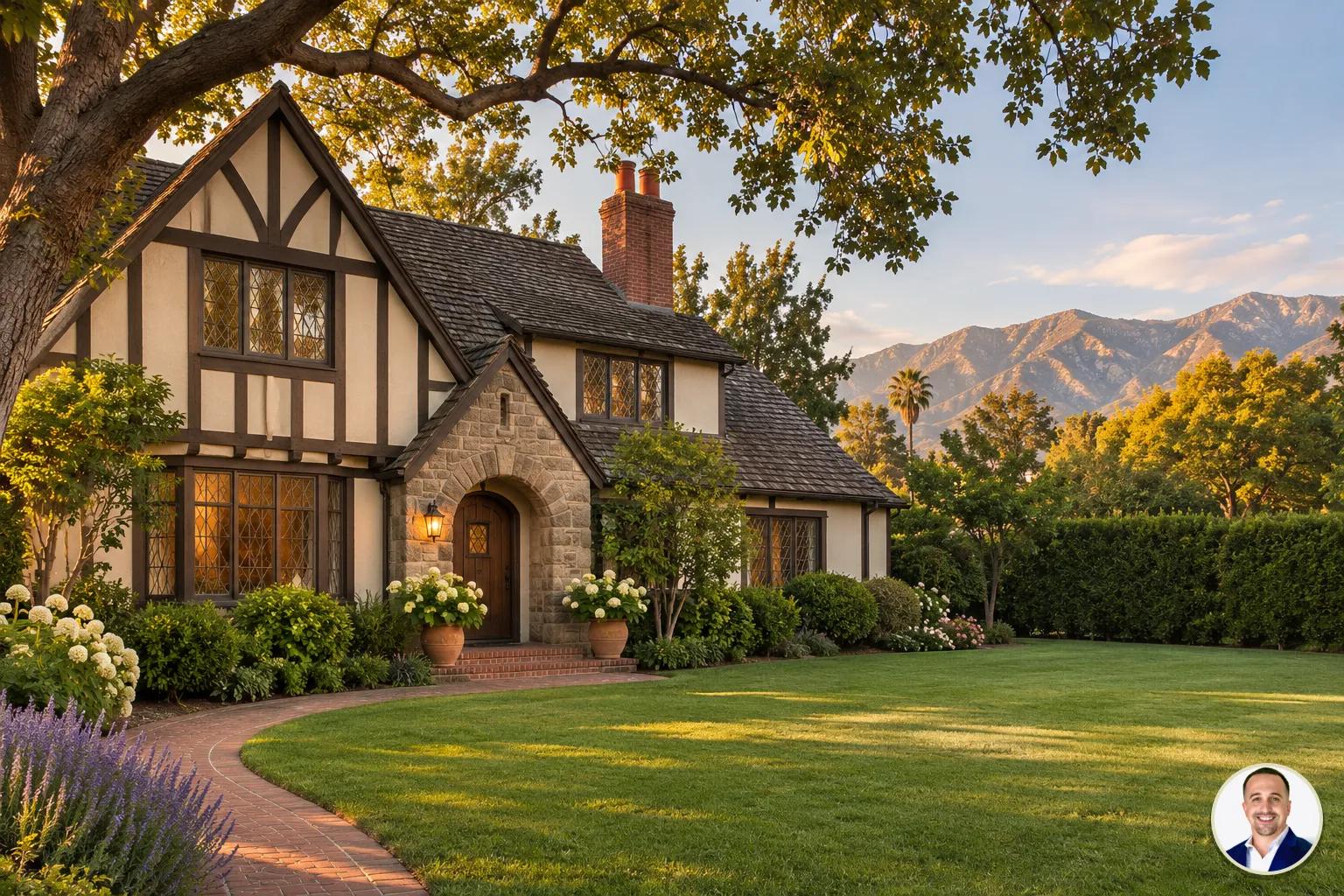
I’m Justin Borges, and I handled the sale of a 1926 Pasadena Tudor that sold for $1,270,000 against a list price at sale of $1,198,000: 106.0% of list, or $72,000 over, after 16 days on the market. The MLS sales note records 3 bedrooms and 1,386 square feet.
The MLS note tells us what happened in this sale; the Tudor description is my account of the home. This result is one reference point, not a guarantee for another property.
What does this Pasadena sale tell us?
The sale price exceeded the list price at sale. The MLS note does not establish how many offers were made, why the parties agreed to the final terms, or the condition of every component of the house. It also does not describe the preparation or marketing steps, so I would not attach a staging or pricing story to this sale.
When I use this sale as a comparison, I look at the other property’s condition, layout and setting alongside the MLS sales note. I also separate the asking price from the amount a buyer ultimately paid. Here, the list price at sale was $1,198,000 and the sale price was $1,270,000, a difference of $72,000.
To discuss a comparison, call me at (213) 262-5092.
How should you use the sale as a comparison?
Start with what the figures can actually tell you. The list price at sale was the asking price used for the comparison, and the final price was higher. Days on market measures the time reported in the MLS, not the time a seller spent preparing the property or the time a buyer spent searching. The sale price does not disclose the terms that mattered to either party, and it cannot tell us what another house will bring.
Ready to move forward? Let's talk.
For perspective, the team’s MLS export records 89 closed sales with an average sale price of 103.6% of list. The individual sale and the broader set answer different questions: one describes a specific home, while the other summarizes a group of transactions. I use the group to give the individual result context, then review the homes a buyer or seller is considering now.
I would start a comparison with the basics: size, layout, condition and setting. Then I would look at how much work a buyer might need to investigate and whether the details that distinguish the home remain useful to the next owner. A similar-looking facade alone does not make two properties interchangeable. For a buyer, I would compare what each home offers for the price and identify the questions that could affect the decision to proceed. For a seller, I would examine which differences a buyer can see during a visit and which need records or further explanation. I would put the sales side by side and note where the records or inspection findings reveal meaningful differences. The broader MLS export contains 89 closed sales averaging 103.6% of list.
What Tudor Revival details are worth a closer look?
For help planning your questions, text me at (213) 262-5092.
Pasadena’s Design Guidelines for Historic Districts describe Tudor Revival homes as often asymmetrical, with irregular plans and steep gable or cross-gable roofs. The guidelines also identify stucco walls, decorative half-timbering, brick accents, recessed entries and groups of tall, narrow casement windows, sometimes with leaded diamond panes. These are style characteristics, not a checklist of features verified at the home in this sale.
For a buyer, the roof shape is more than a visual detail. I want accessible roof surfaces, flashing and drainage examined, particularly where roof sections meet and around the chimney. I would review what the inspector could see, identify inaccessible areas and arrange a closer roofing review when the findings call for one. A steep roof may require a different approach to evaluation than a simple view from the ground. I would read the inspection report with the buyer and mark any areas that were not accessible. If the report calls for more information, I want that question addressed as part of the buyer’s review of the home.
Ready to move forward? Let's talk.
Decorative half-timbering and stucco give some homes their Tudor appearance. Pasadena’s guidelines describe the half-timbering as decorative, so I would avoid assuming that visible trim tells the whole story of the framing behind it. Look for cracks, bulging or signs of water around openings and roof connections, and make a note of their location for the inspection report.
The National Park Service’s historic stucco guidance says water infiltration is responsible for most stucco deterioration and points to areas including roofs, chimneys, windows and foundations. That makes the source of moisture an important question. Covering a visible patch without understanding where water is entering may leave the underlying concern unresolved. I would trace the question back to the areas identified in the guidance and compare what we see with any available repair records. That gives the buyer a clearer set of questions about the wall and the source of moisture.
To talk through an offer or listing, call me at (213) 262-5092.
Windows deserve a close look for both daily use and preservation. Open and close accessible windows, note damaged panes or frames, and ask about drafts and signs of moisture. If the house has historic steel casements, the National Park Service’s steel window guidance identifies rust as a central repair consideration. I would review the actual condition and repair options before deciding whether a window needs replacement. The National Park Service identifies rust as a central consideration for historic steel windows.
What should you check before an offer or listing?
Walk through the home and note the architectural details that matter to you. Review available disclosures and property records, then discuss the roof and drainage, foundation, chimney, electrical and plumbing systems, and any signs of moisture with qualified inspectors. I would confirm the scope of each inspection and schedule further evaluation where the report identifies a concern.
For the foundation, ask about visible movement, drainage and any available records of reinforcement or repairs. I would review the observations and follow up on signs of movement or drainage problems. For the chimney, I want accessible masonry and mortar examined and any concerns followed up. The National Park Service’s masonry guidance identifies cracked mortar joints, loose brick and damp walls among signs that repointing may be needed. I would document those visible signs and use the report to decide what needs a closer examination.
Ready to move forward? Let's talk.
Review the electrical and plumbing systems in the context of how you plan to use the home. Ask what has been updated, request available permits or invoices, and identify any questions the general inspector recommends taking to a specialist. If a report notes a limitation, I would find out whether additional access or evaluation is practical before deciding how to proceed. I also want the buyer to understand the difference between a documented update and an unanswered question. Available permits and invoices help organize that review; the inspection report helps identify what needs attention now.
The EPA and HUD disclosure fact sheet (checked 2026-11-09) explains lead-based paint disclosure requirements for homes built before 1978. I would put the disclosure alongside the inspection reports so the buyer can review known information and open questions together.
To discuss your character home, text me at (213) 262-5092.
For a buyer, I would organize disclosures, records and inspection questions before making decisions about the offer. Identify the features you value, the issues you want a professional to evaluate, and the information you still need. After the inspections, review the findings together and decide which items deserve follow-up. I would keep a written list of open questions and use the reports to decide which items need follow-up before moving ahead.
Before listing, gather records of work, available reports and known issues. I would walk the property with you and compare its size, condition and character with relevant sales and current competition. You can also browse Pasadena homes. For this sale, the MLS recorded 3 bedrooms and 1,386 square feet.
How can a seller prepare a character home?
I would begin with a walk-through and a conversation about the seller’s priorities. We would identify the details that give the home its character and make a list of questions a buyer is likely to raise. Records of maintenance, permits and prior work can help explain what is known. Where records are incomplete, I would keep that distinction clear rather than fill gaps with assumptions. I would organize the available material before discussing how to describe the property. That gives us a useful way to answer questions about work the seller can document and to recognize where the records do not provide an answer.
Ready to move forward? Let's talk.
Next comes the pricing discussion. I would review comparable sales and current competition, paying attention to differences in condition, size, setting and layout. I would use this Pasadena sale alongside other relevant properties and make a pricing decision based on the particular house and the information available when it is offered.
Presentation should help buyers understand the home they are seeing. A clear description can point out architectural details without implying that a feature has been restored, inspected or confirmed when it has not. I would discuss any known concerns and available documentation with the seller so that the information presented is consistent with what the records actually show. During a walk-through, I would also consider how the layout and visible features come across to someone seeing the home for the first time. The aim is a clear account of the property, supported by the information the seller has available.
For both sides, the useful lesson from this sale is to connect the numbers to the property. A buyer can compare the asking price with other relevant homes while planning the necessary inspections. A seller can study comparable properties and prepare records before deciding how to present the home. In this case, the recorded result was 106.0% of the list price at sale after 16 days on the market.
To discuss your character home, text me at (213) 262-5092.
Questions about this Pasadena Tudor sale
Does this sale establish the value of another Pasadena Tudor?
No. I would compare the home’s condition, size, setting and relevant recent sales before discussing a price range.
What should a buyer check before making an offer on a Tudor?
Review available disclosures and property records, and discuss the roof, drainage, foundation, chimney, electrical and plumbing systems with qualified inspectors.
Does a sale above list prove there were competing offers?
No. The list and sale prices alone do not establish how many offers were made or why the parties agreed to the final price.
Should a seller price a character home using this sale alone?
No. I would consider comparable properties, the home’s condition and the seller’s priorities.
Which list price does the sale-to-list comparison use?
It uses the list price at sale, as recorded in the MLS sales note.
The MLS sales note records a sale price of $1,270,000 and 16 days on the market.
Sources
- MLS sales note and team MLS export, export dated 2026-10-29; individual sale figures supplied in the sales note.
- The Borges Real Estate Team, team fact file updated 2026-07-08 and MLS statistics recorded from the 2026-10-29 export.
- EPA and HUD Lead-Based Paint Disclosure Rule Fact Sheet, checked 2026-11-09.
- City of Pasadena, Design Guidelines for Historic Districts, April 2002, checked 2026-11-09.
- National Park Service, Preservation Brief 22: Historic Stucco, checked 2026-11-09.
- National Park Service, Preservation Brief 13: Historic Steel Windows, checked 2026-11-09.
- National Park Service, Preservation Brief 2: Repointing Mortar Joints, checked 2026-11-09.

Justin Borges
Team Lead, The Borges Real Estate TeamDRE #01940318
With over 13 years in Southern California real estate, Justin specializes in probate sales, trust properties, and character homes. His expertise in 1031 exchanges and historic preservation has helped hundreds of clients navigate complex real estate transactions.