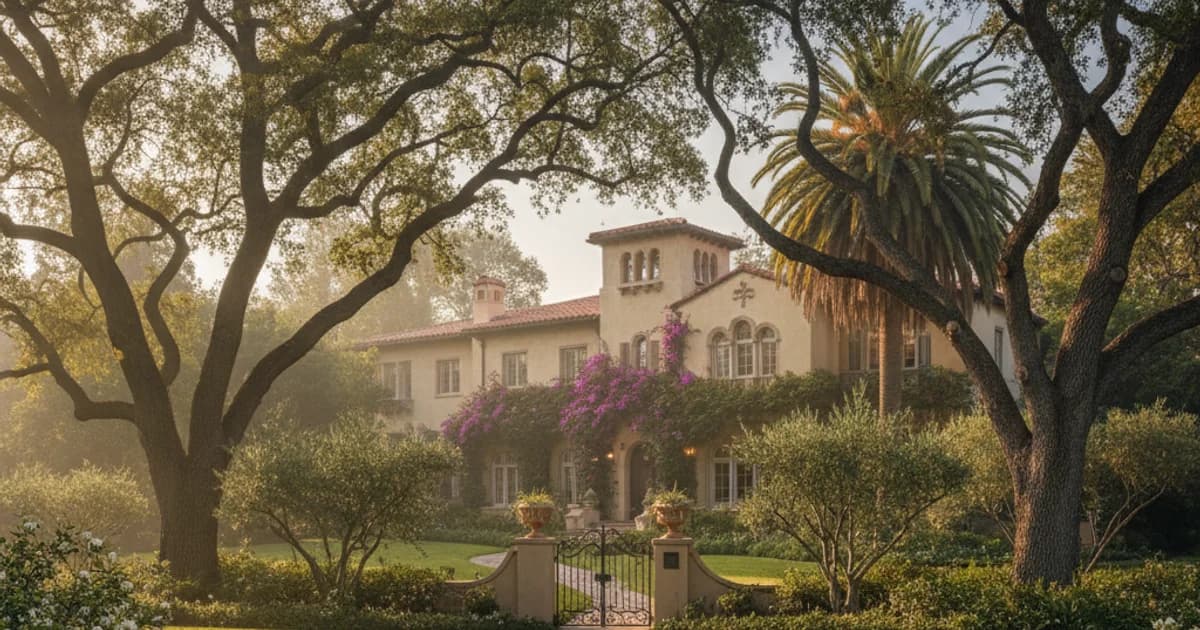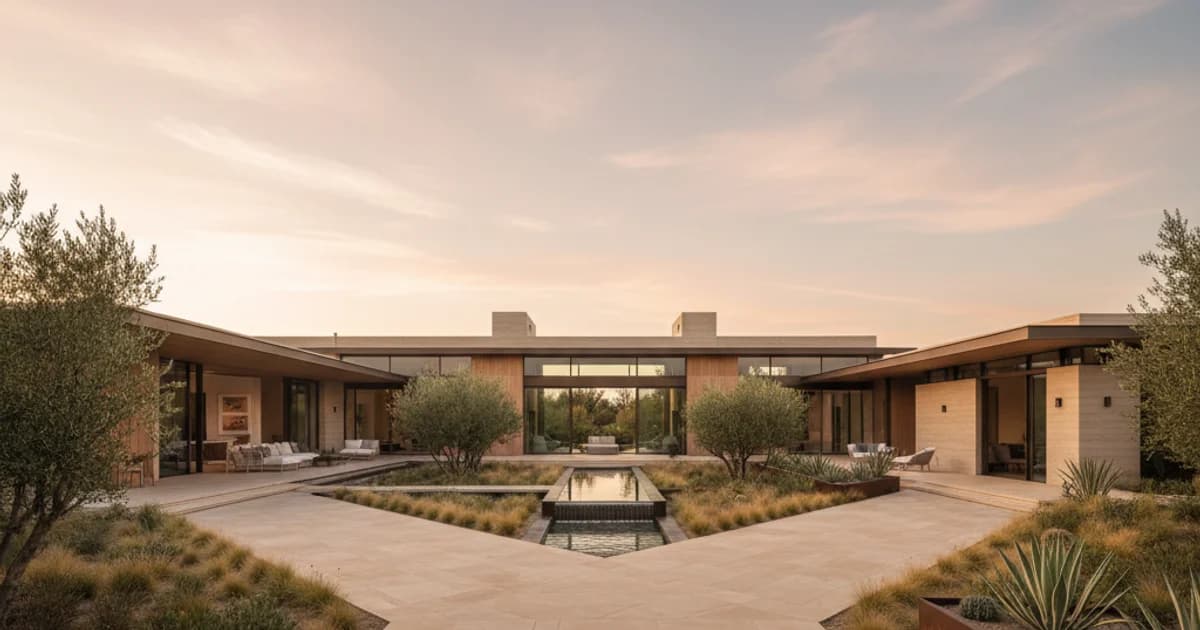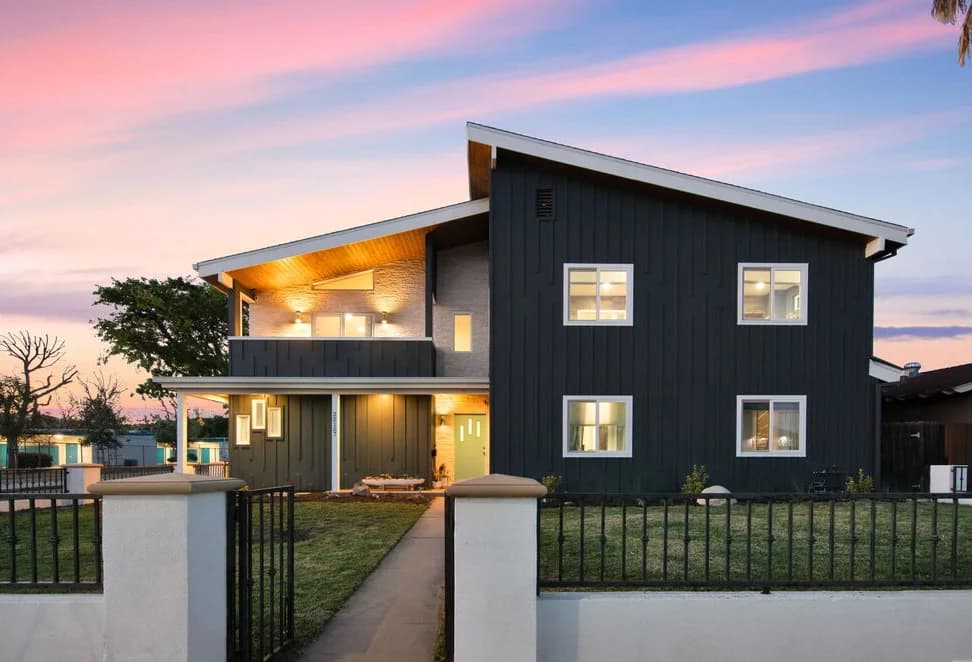

Los Angeles homeowners can now build an accessory dwelling unit on nearly any residential lot in the city, and the rules have never been more favorable. Between state legislation removing barriers and LA's own faster permitting process, adding a second unit to your property is faster, cheaper, and more profitable than it was even two years ago. Whether you want rental income, space for family, or a property value boost of 20% to 30%, understanding the current ADU laws is the first step.
I have helped dozens of clients across Pasadena, Glendale, Eagle Rock, and the broader San Gabriel Valley evaluate whether an ADU makes financial sense for their property. The answer depends on your lot size, zoning, construction budget, and long-term goals. This guide covers every rule, cost, and timeline you need to make an informed decision in 2026.
Thinking about adding an ADU to your LA property?
1. What Is an ADU?
An accessory dwelling unit is a secondary residential unit built on a single-family or multifamily lot. In Los Angeles, ADUs have become the primary tool for adding housing density without changing the character of established neighborhoods. The California Department of Housing and Community Development defines them as self-contained units with their own kitchen, bathroom, and entrance.
You might hear them called granny flats, in-law suites, backyard homes, or casitas. Regardless of the name, they all fall under the same permitting framework in LA. The city has processed thousands of ADU permits since the landmark AB 68 and SB 13 legislation in 2020, and the pace continues to accelerate as newer laws remove remaining obstacles.
For homeowners in neighborhoods like Silver Lake, Highland Park, Pasadena, and Glendale, an ADU represents one of the most straightforward paths to generating rental income without selling or buying additional property. It is also one of the few home improvements that reliably adds more value than it costs to build.
2. Types of ADUs You Can Build in Los Angeles
Los Angeles permits four main types of accessory dwelling units. Each has different size limits, setback requirements, and cost profiles. Choosing the right type depends on your lot layout, budget, and timeline.
| ADU Type | Max Size | Typical Cost | Best For |
|---|---|---|---|
| Detached ADU | 1,200 sq ft | $200K-$350K | Maximum rental income, large lots |
| Attached ADU | 1,200 sq ft or 50% of primary home | $150K-$280K | Homes with existing structure to expand |
| Garage Conversion | Existing footprint | $100K-$150K | Budget-conscious, faster timeline |
| Junior ADU (JADU) | 500 sq ft | $50K-$100K | Existing space within primary home |
Detached ADUs are standalone structures in your backyard. They command the highest rents because tenants have complete privacy and a separate entrance. In neighborhoods like Eagle Rock and Altadena, a well-designed detached ADU can rent for $2,200 to $2,800 per month.
Attached ADUs share at least one wall with your primary residence. They cost less to build because they can share utilities and foundation work, but they offer less tenant privacy. Size is capped at 1,200 square feet or 50% of the primary home's living area, whichever is less.
Garage conversions are the fastest and most affordable option. Since the structure already exists, you skip foundation and framing costs. AB 68 eliminated the requirement to replace parking spaces when converting a garage, which removes a major cost barrier. In the Glendale and Burbank markets, converted garages rent for $1,500 to $2,000 per month.
Junior ADUs are carved out of existing space within your primary home, typically a master bedroom or attached garage. They must include a cooking facility (a wet bar with a small burner counts) and can share a bathroom with the main house. The big advantage: you can build both a JADU and a full ADU on the same lot, giving you two rental income streams.
California law allows one JADU (up to 500 sq ft within your home) plus one full ADU (up to 1,200 sq ft) on a single-family lot. This means a homeowner in South Pasadena could potentially generate $4,000 to $5,000 per month in combined rental income from both units.
Not sure which ADU type fits your property?
3. California ADU Laws: 2024-2026 Updates
The state legislature has passed a wave of ADU-friendly bills over the past several years. If you researched ADU rules in 2022, much of what you read is now outdated. Here is what currently applies.
AB 68 and SB 13 (2020 foundation): These companion bills established the modern ADU framework. They capped local impact fees, required ministerial approval (no discretionary review), set maximum setbacks at 4 feet for detached ADUs, and forced cities to process permits within 60 days. Los Angeles was among the first major cities to align its local ordinance with these requirements.
SB 897 (2023): This bill addressed unpermitted construction, a massive issue in Los Angeles. Previously, if your property had any unpermitted work (an enclosed patio, an unapproved addition), the city could block your ADU permit entirely. SB 897 now allows ADU permits to proceed as long as the unpermitted work does not pose a public health or safety threat. The bill also eliminated the requirement to install fire sprinklers in your primary home when building an ADU, saving homeowners $5,000 to $15,000.
AB 1033 (2023, condo conversion): Perhaps the most significant ADU legislation in recent years, AB 1033 allows local governments to permit the separate sale of an ADU as a condominium unit. This means you could build an ADU, create a condo map, and sell the ADU independently from your primary home. Los Angeles has not yet adopted an ordinance to implement this, but several LA County jurisdictions are actively developing their frameworks. When it takes effect locally, it will fundamentally change the ADU investment calculus.
AB 976 and AB 1332 (2025): AB 976 permanently eliminated owner-occupancy requirements for ADUs. Homeowners no longer need to live on the property to rent out an ADU. AB 1332 requires cities to approve or deny complete ADU applications within 60 days. If the city fails to act, the permit is automatically deemed approved.
SB 543 (2026): Effective January 1, 2026, this bill requires local agencies to make a completeness determination on ADU permit applications within 15 business days. This prevents agencies from slow-walking applications by repeatedly requesting additional information. For Los Angeles homeowners, this means a clearer and more predictable permitting timeline.
| Law | Year | Key Change |
|---|---|---|
| AB 68 / SB 13 | 2020 | Modern ADU framework, 60-day permits, 4-ft setbacks |
| SB 897 | 2023 | Unpermitted work no longer blocks ADU permits |
| AB 1033 | 2023 | ADU condo conversion (local opt-in) |
| AB 976 | 2025 | No owner-occupancy requirement, permanent |
| AB 1332 | 2025 | 60-day auto-approval if city fails to act |
| SB 543 | 2026 | 15-day completeness determination required |
4. LA City Permit Process and Costs
The Los Angeles Department of Building and Safety (LADBS) handles ADU permits through a ministerial process, meaning no public hearings or discretionary approvals. You submit plans, LADBS reviews them against the checklist, and you get your permit. The process has gotten significantly faster since 2024.
Permit timeline: Under SB 543, LADBS must determine your application is complete within 15 business days. Once deemed complete, they have 60 calendar days to approve or deny. In practice, straightforward projects (garage conversions, pre-approved plans) move through in 30 to 45 days. Custom detached ADUs with complex engineering typically take 60 to 90 days.
Permit costs: Total permitting fees in LA range from $5,000 to $25,000 depending on unit size and type. Small garage conversions under 750 square feet often avoid school fees and utility connection charges, bringing total permit costs to the $5,000 to $10,000 range. New detached ADUs over 750 square feet trigger school impact fees, sewer connection fees, and other charges that push total costs to $15,000 to $25,000.
Pre-approved plans: LADBS maintains a library of pre-approved ADU plans that skip the plan check phase entirely. These plans cost $3,500 to $5,000 to license and can cut your permitting timeline to as little as two weeks. The tradeoff is limited customization. For homeowners who prioritize speed over design flexibility, pre-approved plans are the fastest path to a permitted ADU in Los Angeles.
Budget 10% to 15% of your total construction cost for permitting and soft costs (architectural plans, engineering, surveys, permits). On a $250,000 ADU build, that is $25,000 to $37,500. Clients who budget accurately from the start avoid the stress of unexpected cost overruns midway through construction.
Want to know what your ADU project would actually cost?
5. Construction Costs by ADU Type
Construction costs in Los Angeles have stabilized somewhat since the post-pandemic surge, but building anything in LA remains expensive compared to most of the country. Here is what you should expect to pay for each ADU type in 2026, based on projects I have seen across Pasadena, Eagle Rock, Glendale, and surrounding areas.
The biggest cost drivers are foundation work, utility connections, and finishes. A detached ADU requires a new foundation, separate utility hookups (water, sewer, electrical), and typically a new concrete slab and framing from scratch. A garage conversion skips most of these because the slab and walls already exist. You are primarily paying for insulation, drywall, plumbing, electrical upgrades, a kitchen, and a bathroom.
Per-square-foot costs in LA run approximately $250 to $400 for new construction and $150 to $250 for conversions. These numbers include materials, labor, and contractor overhead. They do not include permits, architectural plans, or landscaping.
One pattern I see repeatedly across Highland Park and Altadena: homeowners who choose mid-range finishes (quartz countertops, LVP flooring, standard appliances) instead of high-end materials save 15% to 20% on construction costs without meaningfully reducing rental income. Tenants care about layout, natural light, and a functional kitchen far more than premium tile selections.
6. Setback Rules and Parking Exemptions
Setback and parking rules are where most homeowners get confused, and where the state has made the most aggressive changes. Here is the current framework for Los Angeles.
Setbacks for new detached ADUs: The minimum rear and side setbacks are 4 feet from property lines. Your ADU must be at least 10 feet from the primary dwelling unless it is attached. These are statewide minimums that override any stricter local requirements LA previously had. For homeowners in neighborhoods with narrow lots, like much of Echo Park, Glassell Park, and Atwater Village, the 4-foot setback makes ADUs feasible on lots that would have been too small under older rules.
Garage conversions: If you convert an existing garage into an ADU, you do not need to meet any setback requirements, even if the garage sits on the property line. The existing footprint is grandfathered in. This is a major advantage for properties in older LA neighborhoods where garages were built right up to the rear lot line.
Parking exemptions: State law eliminates replacement parking requirements when you convert a garage to an ADU. Beyond that, no parking is required for any ADU located within half a mile of a public transit stop. In Los Angeles, this covers enormous swaths of the city. Properties near Metro stations in Pasadena, Highland Park, South Pasadena, and Glendale all qualify. If your property is within half a mile of a Metro A Line (Gold Line) station, a Metro B/D Line station, or a high-frequency bus stop, you do not need to provide any parking for your ADU.
Properties within half a mile of Metro stations in Pasadena (Del Mar, Memorial Park, Lake, Allen, Sierra Madre Villa), Highland Park, South Pasadena, and dozens of other stops are fully exempt from ADU parking requirements. This covers most of the areas where my clients are building ADUs.
Height limits: Detached ADUs can be up to 16 feet tall on single-family lots, or up to 18 feet if located within half a mile of a transit stop or on a multifamily lot. Two-story ADUs are permitted under current state law, which opens up the possibility of building a smaller footprint unit with more living space by going vertical. This is particularly valuable on tighter lots in Silver Lake, Los Feliz, and Mt. Washington where yard space is limited.
Want to check if your lot qualifies for an ADU?
7. Rental Income Potential by Area
The rental income an ADU generates depends on its size, location, finishes, and whether it is a studio, one-bedroom, or two-bedroom unit. Across my coverage area, here is what I am seeing in 2026.
Studios command less per month but often deliver a higher return on investment because they cost significantly less to build. A garage conversion studio in Eagle Rock might cost $120,000 to build and rent for $1,700 per month, yielding a gross return of 17% annually. A full detached one-bedroom in Pasadena might cost $280,000 and rent for $2,500, yielding a gross return of 10.7%. Both are strong investments, but the studio reaches break-even faster.
One factor that catches LA homeowners off guard: ADU rent control. Under AB 1482 (the California Tenant Protection Act), most ADUs built after 2020 are subject to rent increase caps of 5% plus CPI annually. However, ADUs that are no more than 15 years old and are not owned by a corporate entity are exempt from AB 1482. For individual homeowners building a new ADU, this means you are exempt from state rent control for the first 15 years. LA's local RSO does not apply to units built after 1978, so your ADU is also exempt from the city's more restrictive rent stabilization ordinance.
I covered the full rent control implications for LA ADUs in a separate guide. If you are building specifically for rental income, that resource breaks down the AB 1482 exemption timeline in detail.
8. How ADUs Affect Property Value
Adding an ADU to your property in Los Angeles typically increases its market value by 20% to 30%. The exact number depends on the neighborhood, the quality of the ADU, and how appraisers in your area handle income-producing units.
Here is how it works in practice. A single-family home in Glendale worth $1.1 million adds a permitted, high-quality 800 square foot detached ADU. The construction cost is $220,000. After completion, the property appraises at $1.35 million to $1.45 million, reflecting both the added square footage and the income stream. That is a net value gain of $30,000 to $130,000 above the construction cost, plus ongoing monthly rental income.
There is an important caveat. Unpermitted ADUs do not add value and can actually reduce it. Lenders will not include unpermitted square footage in appraisals, and unpermitted units create liability for both sellers and buyers. If you have an existing unpermitted unit, SB 897 now makes it easier to get it permitted retroactively. In my 13 years selling real estate across Los Angeles County, I have seen unpermitted ADUs kill more deals than almost any other single issue.
For sellers considering an ADU as a pre-sale investment, the math works best on properties that are already near the top of their neighborhood's price range. If your home is the most expensive on the block, an ADU adds income potential that can justify a premium price. If your home is at the lower end, buyers may be able to find comparable homes with ADUs already built for less than your asking price plus their own construction costs. I covered current market conditions across LA if you want to see where prices stand heading into spring.
Want a free property evaluation for ADU potential?
9. Prop 19 and Tax Implications
Proposition 19, which took effect in February 2021, significantly changed how property tax reassessment works for inherited properties in California. If you inherited a home and are considering building an ADU, the tax implications are different depending on whether you use the property as your primary residence.
Under Prop 19, inherited properties only retain their parent's low property tax base if the child uses the home as their primary residence and the assessed value at the time of transfer does not exceed the current market value by more than $1 million. If you inherit a home in Pasadena with a $200,000 assessed value and a $1.4 million market value, you can keep the low tax base only if you live there. If you rent it out (or rent out an ADU on it while living elsewhere), the property gets reassessed to current market value.
For homeowners who already own their property outright (not through inheritance), building an ADU triggers a supplemental tax assessment on the value of the improvement only. Your existing home's assessed value stays the same. If you build a $250,000 ADU, your annual property tax increase is approximately $2,500 to $3,000 (roughly 1% to 1.2% of the improvement value). Compared to the $24,000 to $36,000 in annual rental income that ADU generates, the additional property tax is a small fraction.
I have worked with clients navigating inherited property decisions throughout LA County, and the ADU question comes up frequently. The key takeaway: if you inherited the home, live in it as your primary residence before building an ADU, or accept the reassessment. If you bought the home yourself, the supplemental assessment on the ADU improvement is modest and easily offset by rental income.
The rental income from your ADU qualifies for standard landlord deductions: depreciation (27.5-year schedule), mortgage interest, property tax, insurance, maintenance, and management fees. Many LA homeowners find that the tax deductions plus rental income make an ADU one of the most tax-efficient investments available to individual property owners.
Have questions about ADU tax implications for your property?
Frequently Asked Questions About LA ADU Laws
How much does it cost to build an ADU in Los Angeles?
Total costs range from $50,000 for a JADU conversion to $400,000+ for a high-end detached unit. The most common projects I see across Pasadena, Glendale, and Eagle Rock fall in the $150,000 to $300,000 range for a permitted one-bedroom detached or attached ADU including all soft costs.
How long does the ADU permit process take in LA?
Under current state law (SB 543), LADBS must determine completeness within 15 business days and approve or deny within 60 days after that. Pre-approved plans can be permitted in as little as two weeks. Total project timelines including construction run 6 to 8 months for garage conversions and 10 to 14 months for new detached ADUs.
Can I build an ADU on any residential lot in Los Angeles?
Yes, California law requires cities to allow at least one ADU on any residential lot, including single-family, duplex, and multifamily properties. Lot size minimums have been eliminated. If you own residential property in LA, you can build an ADU.
Do I need to live on the property to rent out my ADU?
No. AB 976 permanently eliminated owner-occupancy requirements for ADUs statewide as of 2025. You can rent out both your primary home and your ADU without living on the property.
Can I sell my ADU separately from my main house?
AB 1033 (2023) allows local governments to permit separate ADU sales as condominium units. Los Angeles has not yet adopted an implementing ordinance, but several LA County jurisdictions are developing their frameworks. When implemented, this will allow homeowners to sell an ADU independently via a condo map.
Are ADUs subject to rent control in Los Angeles?
New ADUs built by individual homeowners are exempt from both state rent control (AB 1482) for 15 years and LA's Rent Stabilization Ordinance (which applies only to units built before 1978). This gives you significant flexibility in setting and adjusting rents for the first 15 years of your ADU's life.
How much does an ADU increase my property value?
A permitted ADU typically increases property value by 20% to 30% in Los Angeles, depending on the neighborhood and the quality of the unit. Detached ADUs add the most value. Unpermitted ADUs add no appraised value and can reduce your property's marketability.
Ready to explore ADU options for your LA property?
Search homes with ADU potential in Los Angeles County.

Justin Borges
Team Lead, The Borges Real Estate Team
DRE #01940318
With over 13 years in Southern California real estate, Justin specializes in probate sales, trust properties, and character homes. His expertise in 1031 exchanges and historic preservation has helped hundreds of clients navigate complex real estate transactions.