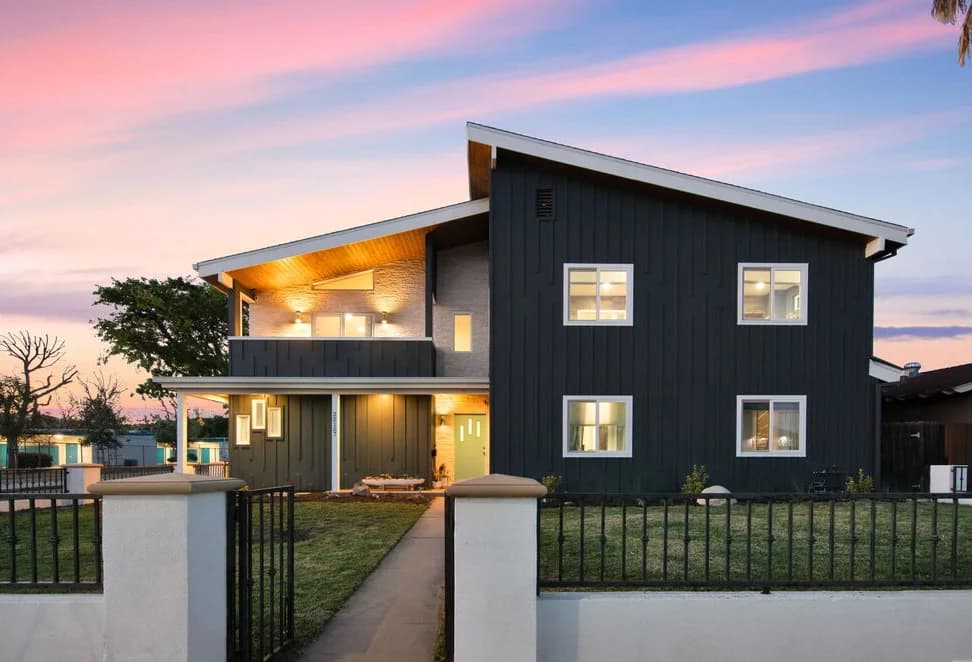
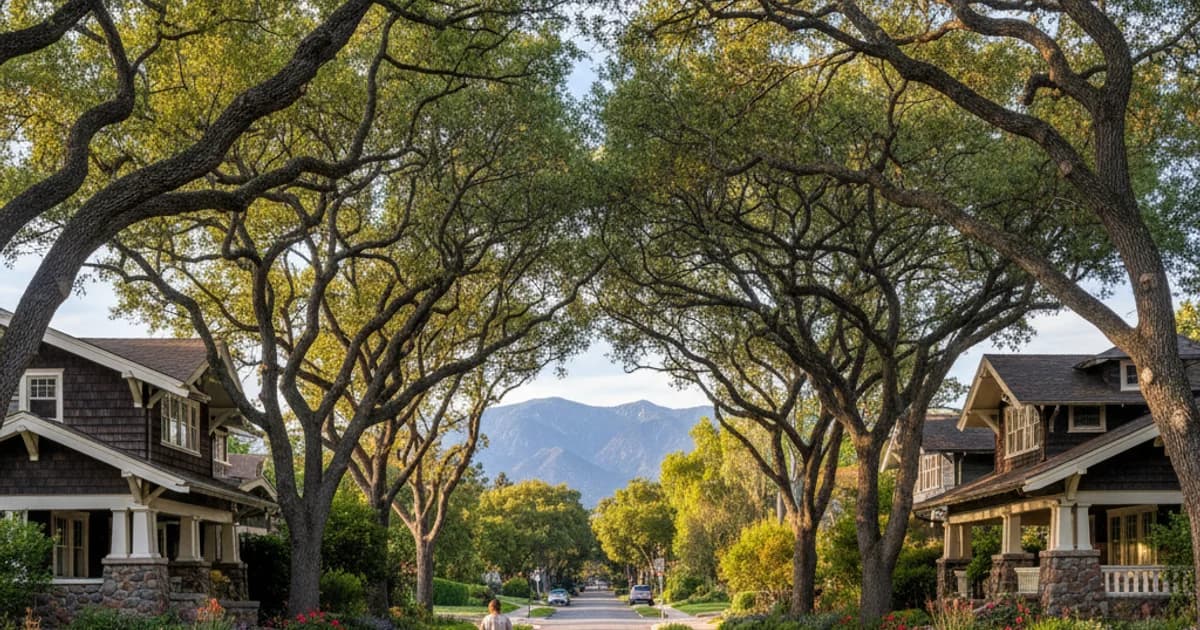
Between the Rose Bowl, Caltech, Old Pasadena, and the Gold Line to Downtown LA, Pasadena draws everyone from young professionals to retirees. But the city's desirability comes at a price. The overall cost of living in Pasadena, CA runs about 43% above the national average in 2026, with housing as the single biggest driver. Below, we break down every major spending category so you know exactly what to budget before making the move.
Housing Costs: Buying a Home in Pasadena
Housing is the largest line item in the cost of living in Pasadena, CA, and it is not close. As of February 2026, the median home sale price in Pasadena sits at approximately $1.3 million, according to Redfin data. That figure represents a 3.7% decline from the prior year, when prices briefly topped $1.35 million. The Zillow Home Value Index, which factors in a broader range of property types including condos and townhomes, puts the average home value at roughly $1.08 million.
Pricing varies significantly by neighborhood. San Rafael estates and the Linda Vista area north of the Rose Bowl tend to exceed $2 million, while areas closer to the 210 freeway and parts of East Pasadena offer entry points in the $700,000 to $900,000 range, primarily through condos and smaller single-family homes.
Rental Prices by Unit Size
The median rent across all unit types in Pasadena is approximately $2,800 per month as of early 2026. Prices swing widely depending on the building age, neighborhood, and amenities. Here is the range by unit size based on data from Zumper, RentCafe, and RentHop:
| Unit Size | Low End | Median | High End |
|---|---|---|---|
| Studio | $1,450 | $1,800 | $2,400 |
| 1 Bedroom | $1,700 | $2,350 | $2,950 |
| 2 Bedroom | $2,000 | $3,100 | $3,600 |
| 3 Bedroom | $3,200 | $4,000 | $5,500+ |
The most affordable rentals tend to cluster in the blocks between Lake Avenue and Allen Avenue north of the 210. Newer luxury apartments in the Playhouse District and near the South Lake Avenue corridor command the highest premiums. Rent in Pasadena runs roughly 15% to 25% higher than the broader Los Angeles County average for comparable units.
Property Taxes and HOA Fees
California's Proposition 13 caps the base property tax rate at 1% of the assessed value at the time of purchase. Pasadena adds voter-approved bonds and local assessments on top of that base, bringing the median effective rate to approximately 1.15%. The exact rate varies slightly by zip code, from about 1.12% in the 91105 area to 1.17% in the 91104 zip code.
| Purchase Price | Annual Tax (est.) | Monthly Tax |
|---|---|---|
| $800,000 | $9,200 | $767 |
| $1,000,000 | $11,500 | $958 |
| $1,300,000 | $14,950 | $1,246 |
| $1,800,000 | $20,700 | $1,725 |
The median annual property tax bill in Pasadena is roughly $6,253, which reflects that many long-term homeowners benefit from lower Prop 13 assessed values. New buyers will pay based on their purchase price, which means significantly higher annual bills in the current market.
For condos and townhomes, HOA fees add another layer. Monthly HOA dues in the Pasadena and broader Los Angeles area typically range from $300 to $500 per month for standard buildings. Luxury complexes with pools, gyms, concierge, and secured parking can run $600 to $1,000 or more. The City of Pasadena recently approved a Central Library bond (Series 2025) that will add a small amount to future tax bills as well.
Utilities: Electricity, Gas, Water, and Internet
Utility costs in Pasadena run about 8% above the national average. Pasadena is somewhat unique in that the city operates its own municipal utility, Pasadena Water and Power, for electricity and water. Gas service comes through SoCalGas.
| Utility | Provider | Monthly Cost |
|---|---|---|
| Electricity | Pasadena Water & Power / SCE | $150 - $240 |
| Natural Gas | SoCalGas | $65 - $76 |
| Water & Sewer | Pasadena Water & Power | $75 - $85 |
| Internet (300+ Mbps) | Spectrum / AT&T Fiber | $50 - $70 |
| Cell Phone | Major carriers | $50 - $85 |
| Trash / Recycling | City of Pasadena | $30 - $45 |
Southern California Edison's residential rate sits at approximately 34.5 cents per kilowatt-hour as of January 2026, a slight decrease from the 35.3 cents per kWh that went into effect in October 2025. For homes served by Pasadena Water and Power instead, rates tend to be competitive with or slightly lower than SCE. A household using 500 kWh per month will see an electricity bill in the $150 to $175 range.
SoCalGas bills average about $76 per month for a typical residential customer using 36 therms, based on the 2026 rate of $2.08 per therm. Water bills through Pasadena Water and Power average roughly $78 per month for a single-family household with a standard meter.
Internet options in Pasadena are solid. AT&T Fiber covers about 95% of the city and starts at $55 per month. Spectrum starts at $49.99 per month for speeds up to 300 Mbps, with 1 Gbps plans available at $70 per month.
Groceries and Dining Out
Grocery prices in Pasadena run roughly 8% to 12% above the national average, depending on the source. A single person can expect to spend $350 to $450 per month on groceries, while a family of four typically runs $800 to $1,000 per month.
Grocery Store Comparison
Pasadena has a strong mix of grocery options. Based on recent price comparisons in the Los Angeles area:
| Store | Price Level | Monthly Basket (Single) |
|---|---|---|
| Trader Joe's | Budget-friendly | $280 - $350 |
| Ralphs (Kroger) | Mid-range | $350 - $420 |
| Whole Foods Market | Premium | $450 - $550 |
| Aldi | Discount | $250 - $320 |
Trader Joe's consistently comes in 10% to 20% cheaper than Ralphs on comparable items. Private-label staples like eggs, milk, bread, and produce offer notable savings. Pasadena's Trader Joe's locations on South Lake Avenue and Arroyo Parkway draw heavy foot traffic for this reason.
Dining Out
Old Pasadena and the surrounding blocks along Colorado Boulevard are packed with restaurants at every price point:
| Meal Type | Average Cost |
|---|---|
| Fast food combo | $11 - $15 |
| Casual restaurant (per person) | $18 - $30 |
| Mid-range dinner for two | $60 - $100 |
| Upscale dinner for two | $100 - $150+ |
| Coffee (cappuccino) | $5.50 - $7.00 |
| Craft beer (pint) | $8 - $12 |
Ready to Move to Pasadena? See What's Available
Browse current listings in Pasadena and surrounding cities. Updated daily.
Transportation and Commuting
Getting around Pasadena involves a mix of driving, public transit, and walking, depending on where you live and where you work. Transportation costs in the Pasadena area break down as follows:
| Expense | Monthly Cost |
|---|---|
| Gas (avg. $4.80/gallon, 12,000 mi/year) | $180 - $240 |
| Car insurance (full coverage) | $180 - $280 |
| Monthly parking (Downtown Pasadena) | $75 - $200 |
| LA Metro (fare capped at $5/day, $18/week) | $72 - $100 |
| Car payment (average new car) | $550 - $750 |
Gas prices in Pasadena average around $4.80 per gallon as of early 2026, though prices fluctuate and have been climbing. Some analysts warn that California refinery closures could push prices toward $7 to $8 per gallon later in 2026, though that represents a worst-case scenario.
The LA Metro Gold Line (now the L Line) runs through Pasadena with six stops, connecting riders to Downtown Los Angeles in about 25 minutes. Metro no longer sells traditional monthly passes. Instead, the system uses fare capping: riders pay $1.75 per trip, capped at $5 per day and $18 per week. For a full-time commuter, that works out to roughly $72 to $80 per month.
Downtown Pasadena parking structures operated by the city charge $75 to $90 per month for monthly permits. Private garages and lots range from $110 to $200 per month. Street parking in Old Pasadena is free for the first 90 minutes in most structures, which helps with short errands.
Healthcare and Insurance
Healthcare costs in Pasadena align closely with the broader Los Angeles County market. Key figures for 2026:
| Coverage Type | Monthly Cost |
|---|---|
| Employer-sponsored (single, employee share) | $108 - $150 |
| Employer-sponsored (family, employee share) | $610 - $750 |
| Covered California Silver plan (individual) | $550 - $690 |
| Doctor visit (co-pay) | $25 - $75 |
| Dental cleaning | $100 - $200 |
For those purchasing through Covered California, the average Silver-tier plan premium for an individual in Los Angeles County runs approximately $687 per month in 2026 before subsidies. Enhanced federal premium tax credits expired at the end of 2025, which increased out-of-pocket costs for many enrollees. Employer-sponsored plans remain the most cost-effective option, with the average California worker contributing about $1,303 per year for single coverage.
Pasadena is well served by Huntington Health (part of Cedars-Sinai), located at 100 W California Blvd, and has strong coverage from Kaiser Permanente and other major health systems.
Childcare and Education
Childcare is one of the largest expenses for Pasadena families with young children. As of March 2026:
| Care Type | Monthly Cost |
|---|---|
| Full-time daycare (infant/toddler) | $2,100 - $3,300 |
| Full-time preschool | $1,800 - $2,500 |
| Nanny (full-time) | $3,200 - $4,500 |
| After-school care | $600 - $1,200 |
The average monthly daycare cost in Pasadena is approximately $2,104, according to Winnie. Hiring a private childcare provider averages about $25.53 per hour, which is 7% above the California average and 26% above the national average. Programs like Kids Klub Child Development Centers in Pasadena list full-day rates from $2,445 to $3,295 per month for the 2025-2026 school year, depending on age group.
Pasadena Unified School District (PUSD) serves the city's K-12 students. The district includes notable magnet and choice programs. Private school options such as Westridge School, Polytechnic School, and Mayfield Senior School range from $25,000 to $45,000+ per year in tuition.
What's Your Pasadena Home Worth?
Thinking about selling? Get a free, data-backed home valuation for your Pasadena property.
Get Your Free Home Value ReportPasadena vs. LA vs. National Average
To put the cost of living in Pasadena, CA in perspective, here is how the city stacks up against the City of Los Angeles and the national average across key categories:
| Category | Pasadena | LA City | National Avg. |
|---|---|---|---|
| Overall Index | 143 | 143 - 150 | 100 |
| Housing Index | 233+ | 233 | 100 |
| Median Home Price | $1.3M | $950K | $420K |
| 1BR Rent (median) | $2,350 | $2,100 | $1,350 |
| Groceries | +8-12% | +9% | Baseline |
| Utilities | +8% | +7% | Baseline |
| Transportation | +15% | +19% | Baseline |
Pasadena and the City of Los Angeles are remarkably close in overall cost-of-living index. The main differences show up in housing, where Pasadena's median home price runs roughly $350,000 higher than the LA metro median. On the flip side, Pasadena can save you money on transportation if you work locally or use the Gold Line, since parking and commute times tend to be shorter than for comparable LA neighborhoods.
Sample Monthly Budget for Living in Pasadena
Here are two sample monthly budgets based on 2026 costs. These assume no car payment for the renter scenario and a moderate lifestyle for both.
Single Professional Renting a 1BR Apartment
Family of Four Renting a 3BR Home
Income Needed to Live Comfortably in Pasadena
The income required to live comfortably in Pasadena depends on your household size, lifestyle, and whether you rent or buy. Here are the benchmarks based on the budgets above and standard financial planning guidelines (housing at 30% of gross income or less):
A single person renting a one-bedroom apartment needs a gross annual income of at least $105,000 to keep housing costs at roughly 30% of income while covering all other expenses. For a family of four renting a three-bedroom home, a combined household income of $160,000 to $180,000 is the minimum for a comfortable (but not extravagant) lifestyle.
If you are looking to buy at the current median price of $1.3 million with 20% down, most lenders will require a household income of $250,000 or more to qualify, accounting for property taxes, insurance, and current interest rates in the 6.5% to 7% range.
Ready to Make Pasadena Home?
Justin Borges knows every pocket of Pasadena. Get personalized cost guidance and listings today.
(213) 262-5092 Text Us InsteadFrequently Asked Questions
What is the cost of living in Pasadena, CA compared to the national average?
The cost of living in Pasadena, CA is approximately 43% higher than the national average as of 2026. Housing drives the largest gap, with median home prices around $1.3 million compared to the national median of roughly $420,000. Groceries run about 8% to 12% above the national average, and utilities are roughly 8% higher. A single person can expect monthly expenses around $3,500 before rent or mortgage, while a family of four averages about $7,800 per month.
How much does rent cost in Pasadena, CA in 2026?
As of early 2026, the median rent across all unit types in Pasadena is approximately $2,800 per month. One-bedroom apartments range from $1,700 to $2,950 depending on the neighborhood and building age. Two-bedroom units typically run $2,000 to $3,600. Three-bedroom rentals are harder to find and generally start around $3,200, with newer units exceeding $4,500 per month.
What is the median home price in Pasadena, CA?
The median home sale price in Pasadena is approximately $1.3 million as of February 2026, which represents a slight decline of about 3.7% compared to the prior year. The Zillow Home Value Index for the city sits around $1.08 million, reflecting a broader mix of property types including condos. Neighborhoods like San Rafael and Linda Vista tend to price higher, while East Pasadena and the areas near the 210 freeway offer somewhat lower entry points.
How much are property taxes in Pasadena?
Pasadena's median effective property tax rate is approximately 1.15%, which includes the Prop 13 base rate of 1% plus voter-approved bonds and local assessments. On a home purchased at $1.3 million, that works out to roughly $14,950 per year or about $1,246 per month. The median annual property tax bill in Pasadena is $6,253, reflecting that many long-term homeowners benefit from lower assessed values under Prop 13.
What salary do you need to live comfortably in Pasadena?
A single person generally needs an annual income of around $105,000 to $110,000 to live comfortably in Pasadena without relying on roommates, keeping housing costs at or below 30% of gross income. For a family of four renting a three-bedroom home, the household income should be at least $160,000 to $180,000. If buying a home at the median price, a household income above $250,000 is typically necessary to qualify for a conventional mortgage.
How much are utilities in Pasadena per month?
The combined monthly utility cost for a typical Pasadena household includes electricity through Pasadena Water and Power or SCE at $150 to $240, natural gas through SoCalGas at $65 to $76, water through Pasadena Water and Power at $75 to $80, internet through Spectrum or AT&T at $50 to $70, and cell phone service at $50 to $85. Total utility costs for an average household run between $390 and $550 per month.
Is Pasadena more expensive than Los Angeles?
Pasadena and the City of Los Angeles have similar overall cost-of-living indexes, both running roughly 43% to 50% above the national average. However, Pasadena's median home price of $1.3 million is higher than the LA metro median of around $950,000. Groceries and dining costs are comparable between the two cities. Where Pasadena can be less expensive is parking and commute costs, since much of the city is walkable around Old Pasadena and the Gold Line provides direct rail access to Downtown LA.
What are the cheapest neighborhoods in Pasadena?
The most affordable areas in the Pasadena region include East Pasadena near the 210 freeway, Northwest Pasadena near the Altadena border, and parts of North Pasadena near the Jet Propulsion Laboratory. For those open to neighboring cities, Altadena to the north, Alhambra to the south, and Temple City to the southeast offer lower housing costs while keeping you within a 10- to 15-minute drive of central Pasadena.
Find Your Home in the Pasadena Area
Search current listings in Pasadena and nearby cities with lower price points.


Justin Borges
Team Lead, The Borges Real Estate Team
DRE #01940318
With over 13 years in Southern California real estate, Justin specializes in probate sales, trust properties, and character homes. His expertise in 1031 exchanges and historic preservation has helped hundreds of clients navigate complex real estate transactions.